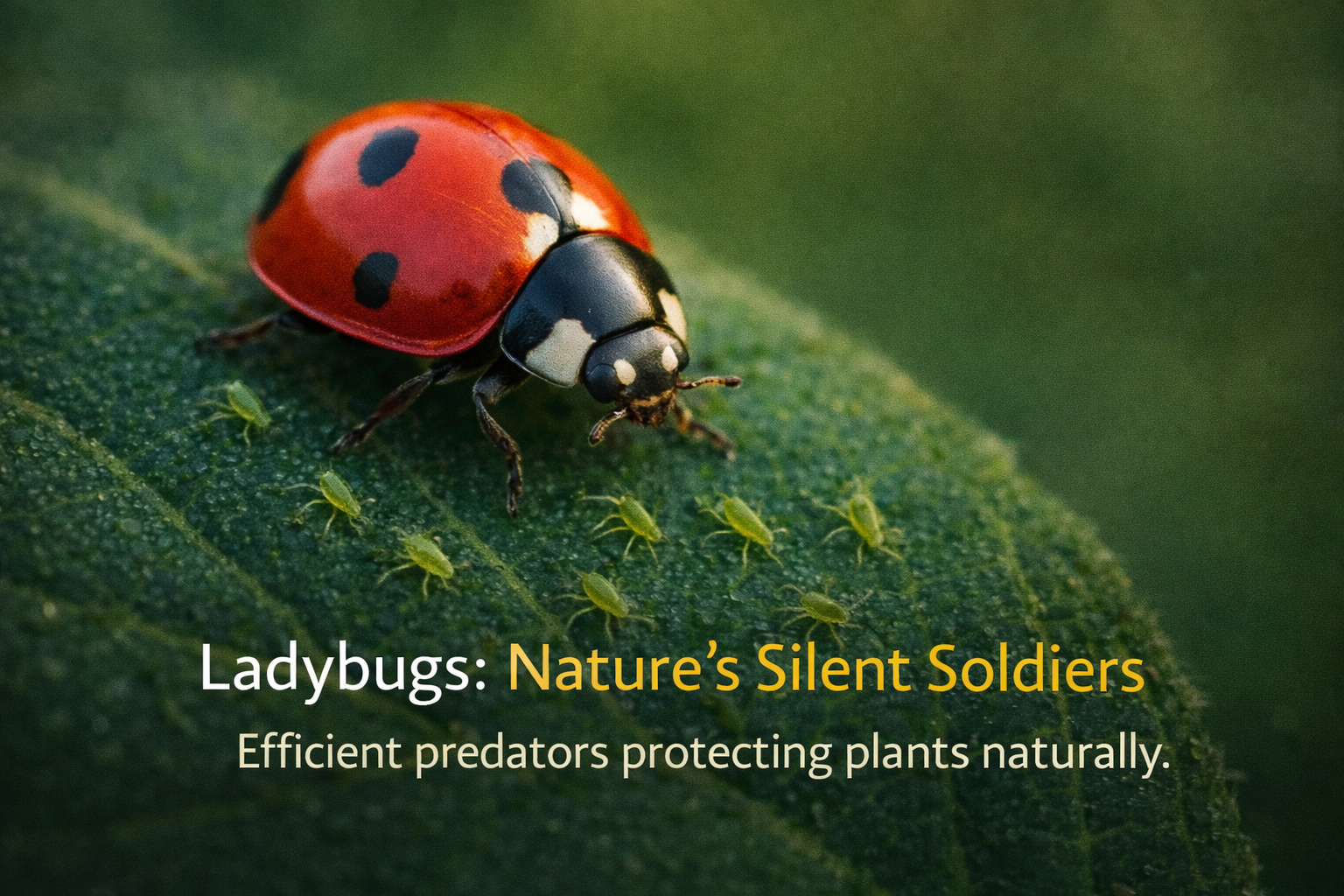
In the quiet corners of gardens, forests, and farmlands, a silent battle unfolds every day. There are no explosions, no alarms, and no visible signs of conflict — yet the outcome shapes ecosystems across the planet. At the center of this hidden war is one of nature’s smallest but most effective allies: the ladybug.
Often associated with luck or childhood innocence, ladybugs are far more than decorative insects. They are highly efficient predators, playing a vital role in maintaining ecological balance.
The Problem: Aphids and Invisible Damage
Aphids are among the most destructive agricultural pests on Earth. These tiny, soft-bodied insects feed on plant sap, weakening crops, spreading plant diseases, and reducing yields. Left unchecked, aphid populations can grow exponentially, overwhelming both natural vegetation and food systems.
Modern agriculture has often relied on chemical pesticides to control aphids. While effective in the short term, these chemicals come with serious consequences — harming pollinators, contaminating soil and water, and disrupting entire food chains.
Nature, however, has already designed a far safer solution.
The Solution: Ladybugs as Natural Predators
Ladybugs (also known as lady beetles) are specialized aphid hunters. A single adult ladybug can consume up to 40–50 aphids per day, while their larvae — often overlooked — are even more voracious.
Over the course of their lifetime, one ladybug may consume between 3,000 and 5,000 aphids. This makes them one of the most effective natural pest control agents in the insect world.
Because they target pests directly and selectively, ladybugs protect plants without harming beneficial insects or damaging the environment.
The Power of Biological Control
In ecological science, ladybugs are classified as biological control agents — organisms used to regulate pest populations naturally. Unlike chemical pesticides, biological control does not poison ecosystems or create long-term environmental damage.
Ladybugs work silently, efficiently, and without side effects:
-
No chemical residues
-
No soil degradation
-
No harm to pollinators like bees
-
No disruption of water systems
This is why many farmers and ecologists actively encourage ladybug populations instead of eliminating insects indiscriminately.
A Common Misunderstanding: Invasive Species
In recent decades, some regions have seen an increase in Asian lady beetles, a closely related but more aggressive species introduced for pest control. These beetles can outcompete native species and cause confusion among observers.
However, the majority of ladybugs remain highly beneficial. The key issue is not the presence of ladybugs themselves, but maintaining ecological balance. Healthy ecosystems regulate populations naturally when biodiversity is protected.
More Than a Symbol of Luck
Ladybugs have long been symbols of good fortune in human culture. In reality, their value goes far beyond symbolism. They represent a powerful truth about nature: complex problems often have simple, elegant solutions — if we allow natural systems to function as intended.
While technology and chemicals promise quick fixes, organisms like ladybugs remind us that sustainability lies in cooperation with nature, not domination over it.
A Quiet Guardian of the Living World
Ladybugs do not roar, sting, or intimidate. They do not announce their presence. Yet every day, they defend plants, support food chains, and preserve balance across ecosystems.
Small. Silent. Powerful.
Sometimes, the most important protectors of our planet are already at work — unnoticed, on a single leaf.
? ChaosmosNews
Exploring the hidden forces shaping Earth and the cosmos.