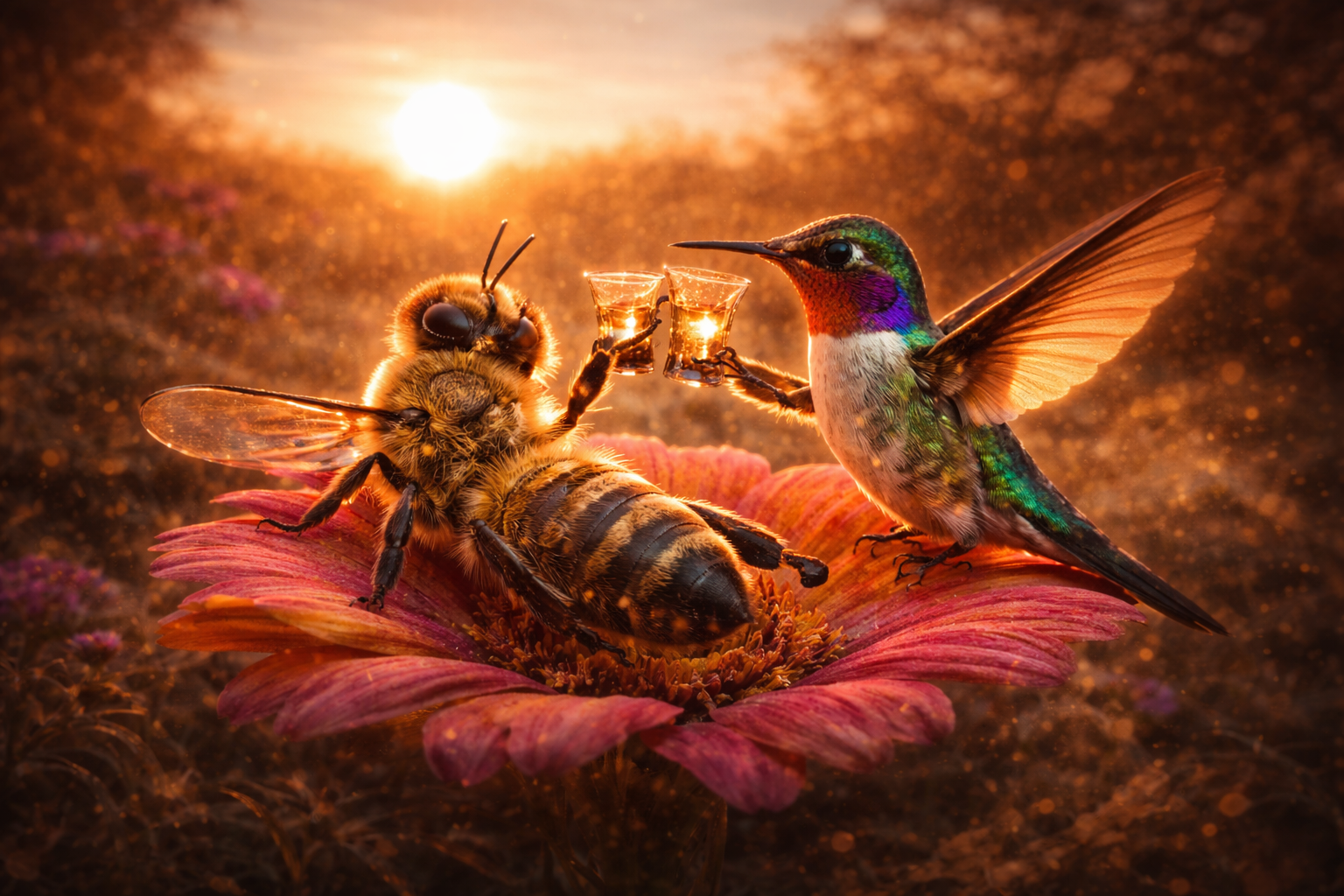
A surprising discovery reveals that fermented flower nectar may expose pollinators to natural alcohol.
? Nature’s Sweet Secret: Fermentation in Flowers
At first glance, a flower seems like nothing more than a delicate, colorful structure — a source of nectar for pollinators like bees and hummingbirds. But beneath this beauty lies a fascinating chemical process.
Scientists have found that under certain environmental conditions, the sugar-rich nectar inside flowers can naturally ferment. This occurs when wild yeasts — present in the environment — interact with the nectar’s sugars, breaking them down and producing small amounts of alcohol.
This means that what appears to be a simple feeding routine may actually involve trace exposure to naturally occurring ethanol.
?? Tiny Drinkers of the Natural World
Pollinators rely heavily on nectar as their primary energy source.
- Bees visit hundreds of flowers daily, collecting nectar and converting it into honey.
- Hummingbirds consume nectar almost constantly, feeding multiple times per hour to sustain their rapid metabolism.
With fermentation occurring in some flowers, these animals may unintentionally consume small amounts of alcohol throughout the day.
However, the levels detected are extremely low — far from anything that would significantly impair their behavior.
? How Does Nectar Turn Into Alcohol?
The process is surprisingly simple and entirely natural:
- Flowers produce nectar rich in sugars like glucose and fructose
- Wild yeasts (carried by air, insects, or the environment) land on the nectar
- These microorganisms begin to break down sugars
- As a byproduct, ethanol (alcohol) is formed
This process is similar to how humans produce alcoholic beverages — just on a much smaller, natural scale.
⚖️ Are Bees and Birds Getting “Drunk”?
The idea may sound amusing, but the reality is far more nuanced.
Research suggests that pollinators are highly adapted to their environment. Even when exposed to small amounts of alcohol:
- Bees continue to navigate and return to their hives
- Hummingbirds maintain flight precision and feeding behavior
- No major impairment has been observed at natural concentrations
In fact, some scientists believe these animals may have evolved a tolerance to such compounds over millions of years.
? Why This Discovery Matters
This phenomenon highlights something deeper about nature:
? Ecosystems are not just biological — they are also chemical systems
? Even the smallest interactions (like nectar feeding) involve complex processes
? Microorganisms play a hidden but powerful role in shaping natural behavior
It also challenges how we perceive the natural world — showing that even something as unexpected as alcohol can exist as part of everyday ecological interactions.
? A Glimpse Into Nature’s Complexity
The idea that bees and hummingbirds may encounter alcohol in their daily lives is not about intoxication — it’s about understanding the hidden layers of nature.
From microscopic yeast to high-speed pollinators, this delicate chain of interaction reveals just how interconnected life truly is.
Nature is not only beautiful…
it’s astonishingly intricate.
? Conclusion
While bees and hummingbirds aren’t “drinking” alcohol in the way humans do, they may still come into contact with naturally fermented nectar on a regular basis.
This discovery serves as a reminder:
Even the simplest moments in nature can hold extraordinary science.