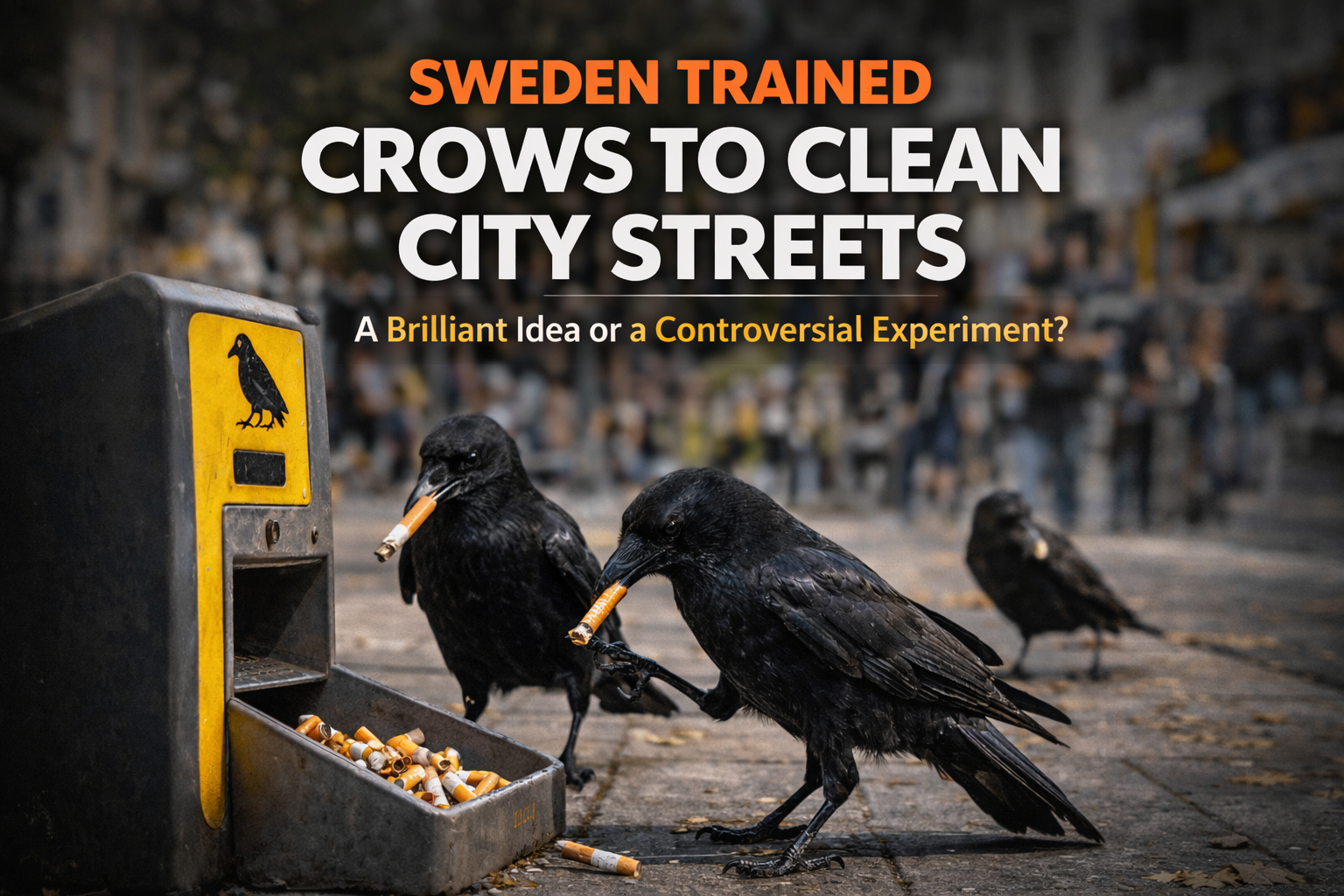
In an unusual attempt to tackle urban litter, researchers in Sweden explored an innovative idea: training crows to collect cigarette butts from city streets in exchange for food rewards.
The project was developed by a Swedish startup called Corvid Cleaning, which focused on using the remarkable intelligence of crows to address one of the most common types of urban waste — cigarette filters.
Every year, billions of cigarette butts are discarded on streets around the world. These small pieces of litter are not only unsightly but also environmentally harmful. Cigarette filters contain toxic chemicals and plastic fibers that can contaminate soil and waterways.
Instead of relying solely on human cleanup crews, researchers asked an intriguing question:
What if nature’s smartest birds could help?
How the Crow Cleaning System Works
The system designed by Corvid Cleaning was relatively simple but clever.
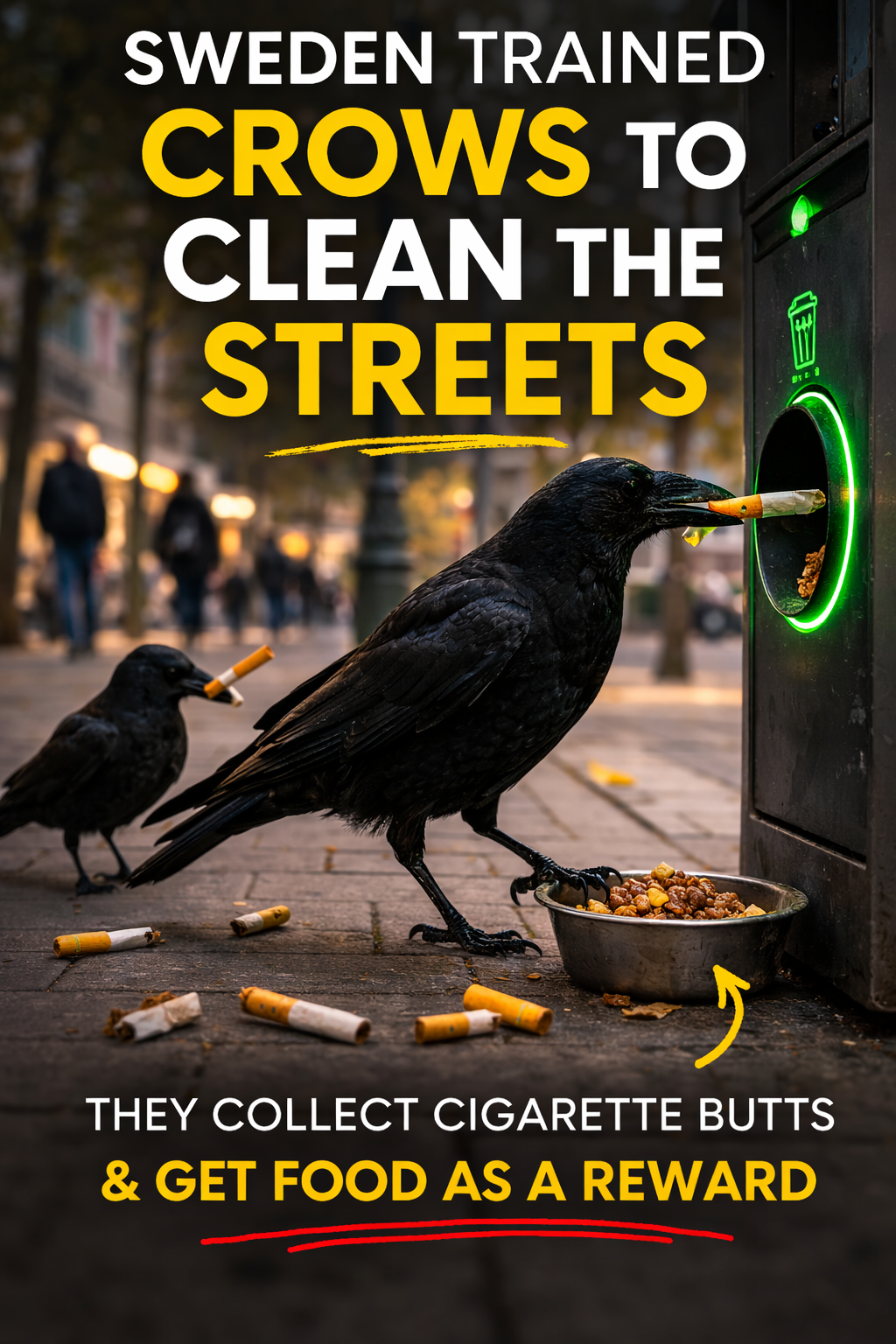
Special machines were placed in public areas. These machines were designed to recognize cigarette butts when they were dropped into a small slot. When a crow deposited a cigarette filter into the machine, a mechanism would release a small food reward.
The concept uses positive reinforcement, a training method widely used in animal behavior studies.
Crows quickly learned that collecting and depositing cigarette butts would earn them food. Over time, they could associate litter collection with a reward, effectively turning the birds into tiny urban cleaners.
Why Crows?
Crows belong to the corvid family, a group of birds known for extraordinary intelligence. Scientists often compare their cognitive abilities to those of young children.
Research has shown that crows can:
• Solve complex puzzles
• Use tools to obtain food
• Recognize and remember human faces
• Communicate with other crows about threats or resources
• Plan ahead and store food for future use
Their problem-solving abilities made them ideal candidates for such an experiment.
In fact, previous studies have demonstrated that crows can be trained to collect coins, sort objects by color, and perform tasks involving multiple steps.
The Scale of the Problem
Cigarette butts are considered the most common type of litter on Earth.
According to environmental studies, an estimated 4.5 trillion cigarette filters are discarded globally every year.
These filters contain microplastics and chemicals such as nicotine, arsenic, and heavy metals. When they break down, they can release toxins into soil and waterways, posing risks to wildlife and ecosystems.
Cleaning them manually is expensive and time-consuming for city governments.
Corvid Cleaning estimated that a crow-assisted cleanup system could reduce municipal cleaning costs by as much as 75 percent.
Ethical Concerns and Debate
Despite the creativity of the idea, the project quickly sparked debate.
Animal welfare experts raised concerns about the long-term health risks for the birds. Cigarette filters contain toxic substances, and repeated exposure could potentially harm the crows.
Critics also questioned whether it was ethical to rely on wild animals to perform human sanitation tasks.
Supporters of the project argued that the system could be designed to minimize risks and that crows already interact with urban waste in many cities.
Nevertheless, the concerns led to discussions about how wildlife should be involved in human environmental solutions.
What Happened to the Project?
While the idea gained global attention and sparked widespread curiosity online, large-scale implementation has not yet become common.
However, the experiment remains an important example of creative thinking in environmental problem-solving.
It also highlights the incredible cognitive abilities of animals and how humans might collaborate with nature in unexpected ways.
A Lesson From Nature
Whether or not crow-powered street cleaning becomes a real urban solution, the project demonstrates something remarkable:
Nature often holds surprising intelligence and potential.
Crows — birds many people overlook in everyday life — are among the most adaptable and intelligent creatures on Earth.
And in the future, innovations that combine technology, ecology, and animal behavior may play a larger role in how cities manage environmental challenges.
✍️ ChaosmosNews