In a world where large-scale infrastructure projects often take years of planning, permits, and millions of dollars in funding, nature quietly delivered a powerful reminder: sometimes, the most effective solutions are already built into the natural world.
In early 2025, an extraordinary event unfolded in the Brdy region of the Czech Republic. A long-delayed government project aimed at restoring a damaged wetland ecosystem had stalled for years due to bureaucratic hurdles. The plan was to construct a dam to improve water retention, filter pollutants, and revive local biodiversity.
But before the project could even begin… nature stepped in.
? The $1.2 Million Problem — Solved for Free
For over seven years, authorities worked on plans to build a dam that would restore the natural balance of the area. The project had secured funding of approximately $1.2 million, yet it remained stuck in administrative processes and permit issues.
Then something unexpected happened.
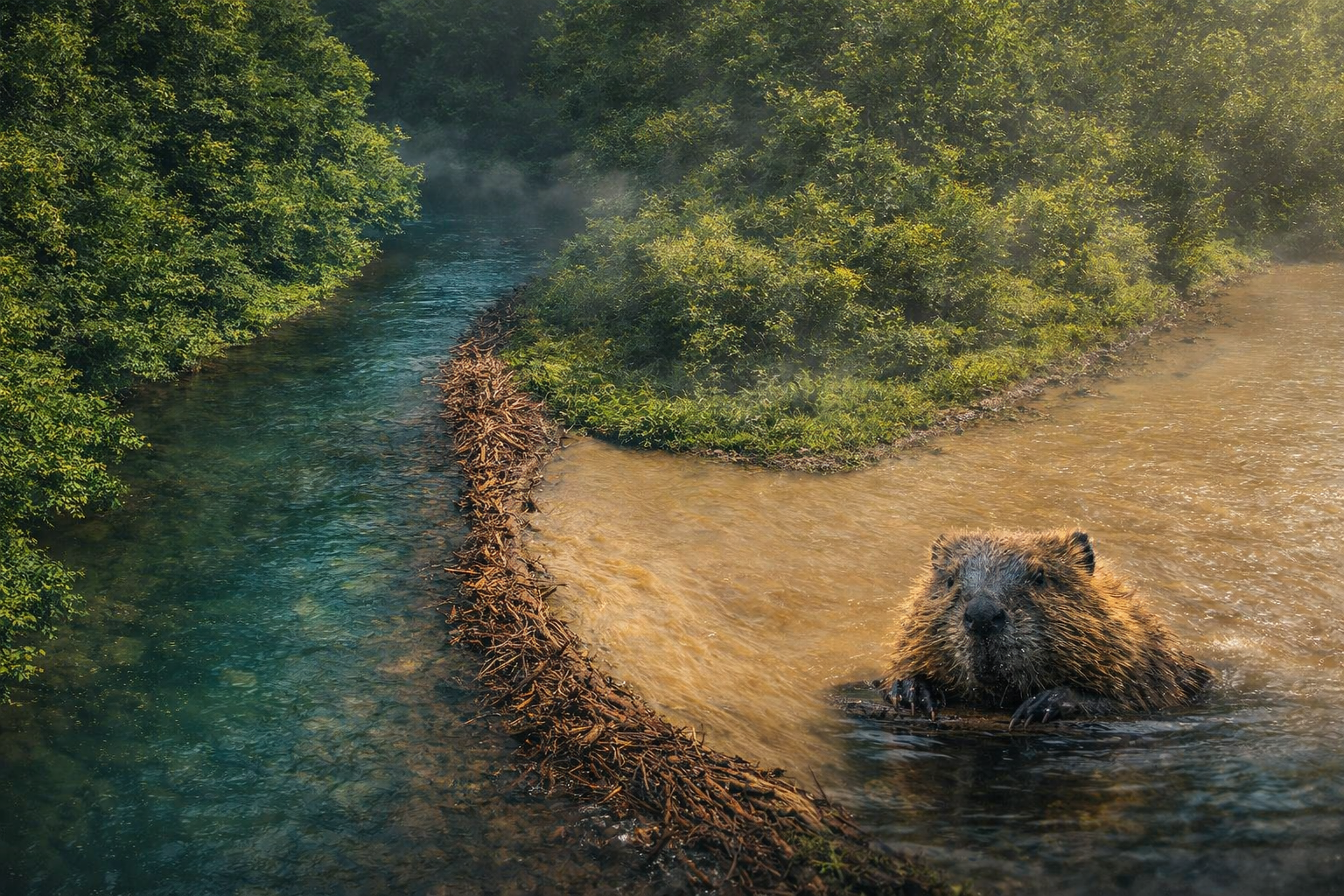
A colony of Eurasian beavers began building their own dam — in almost the exact location where engineers had planned to construct one. Using nothing more than wood, mud, and stones, these animals created a fully functional water management system.
The result?
A natural dam that achieved the same environmental goals — without cost, machinery, or human intervention.
? How Beaver Dams Naturally Clean Water
Beavers are often called “ecosystem engineers”, and for good reason.
When they build dams, they don’t just create ponds for themselves — they reshape entire ecosystems. Their structures slow down water flow, allowing sediments, pollutants, and excess nutrients to settle naturally.
This process leads to:
- Improved water clarity
- Reduced pollution levels
- Stabilized water flow
- Increased groundwater recharge
In essence, beaver dams function as natural water filtration systems — often more efficient and sustainable than artificial alternatives.
? Restoring Entire Ecosystems
The impact goes far beyond water quality.
The wetland created by the beavers quickly became a thriving habitat for a wide range of species, including:
- Amphibians
- Aquatic insects
- Fish
- Birds
These wetlands are among the most biologically rich ecosystems on Earth. By simply following their instincts, beavers created an environment that supports biodiversity, stores carbon, and even reduces the risk of flooding.
Experts often highlight that nearly half of endangered species depend on wetland habitats — making these natural transformations incredibly valuable.
? Nature vs. Human Engineering
What makes this story truly remarkable is not just the cost savings — but the efficiency.
While human engineers spent years navigating paperwork and planning, a group of beavers completed the essential work in a fraction of the time.
No blueprints.
No machines.
No delays.
Just instinct and natural design.
As one conservation official put it, the beavers effectively completed the project “without any documentation and for free.”
? A Lesson in Working With Nature
This story highlights a growing movement in environmental science: working with nature instead of against it.
Rather than replacing natural systems with artificial ones, scientists and engineers are increasingly looking to nature for inspiration — a concept known as nature-based solutions.
Beavers are a perfect example of this approach in action.
Their dams:
- Reduce flood risk
- Improve water storage
- Enhance biodiversity
- Naturally filter water
All while requiring zero maintenance costs.
✨ Conclusion: The Intelligence of Nature
The beavers of the Czech Republic didn’t just build a dam.
They demonstrated something much bigger — that nature often holds solutions we spend years trying to design ourselves.
In a time when environmental challenges are growing more complex, this simple yet powerful example reminds us:
? Nature doesn’t just adapt — it solves.
And sometimes…
it does it better than we ever could.