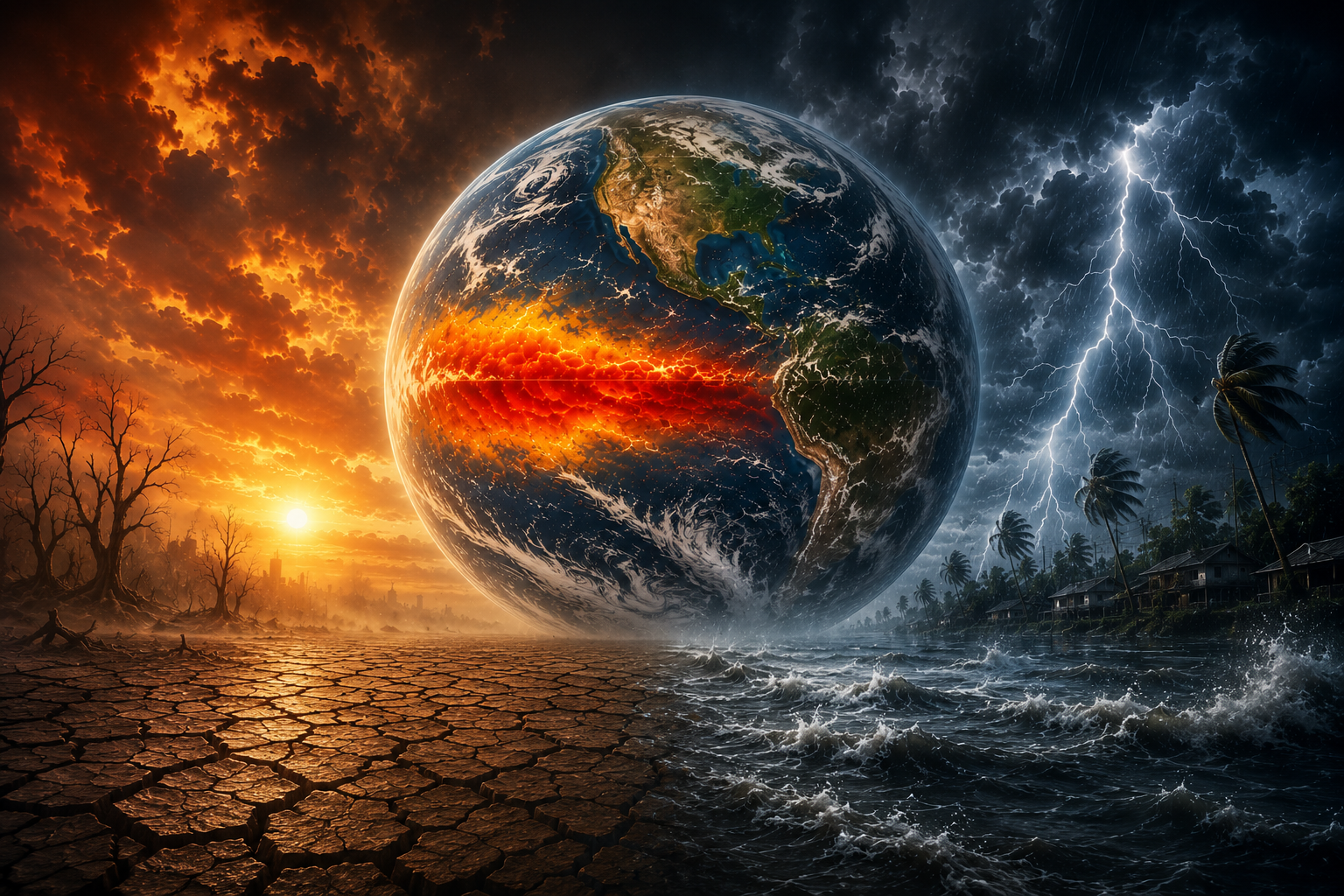
The vast Pacific Ocean is showing signs of warming once again, raising concerns that El Niño could return in the coming months and influence weather patterns across much of the planet.
Although it begins in a relatively small region of the tropical Pacific, El Niño is capable of altering atmospheric circulation on a global scale. Its effects can reach thousands of kilometers beyond its origin, influencing rainfall, droughts, storms, wildfires, and temperatures across multiple continents.
What Is El Niño?
El Niño is the warm phase of a naturally occurring climate cycle known as the El Niño–Southern Oscillation (ENSO). During an El Niño event, sea surface temperatures in the central and eastern equatorial Pacific Ocean become warmer than average.
This additional heat does not remain confined to the ocean. Instead, it changes the exchange of energy between the ocean and atmosphere, disrupting normal wind patterns and shifting weather systems around the globe.
Scientists describe El Niño as one of Earth’s most powerful natural climate drivers.
Why Scientists Are Watching Closely
Recent observations indicate that parts of the tropical Pacific are warming again. While researchers are still evaluating whether a full El Niño event will develop, even moderate warming can influence seasonal weather forecasts.
Climate agencies around the world continuously monitor sea surface temperatures, trade winds, and atmospheric pressure patterns to determine whether conditions are moving toward El Niño territory.
The Pacific Ocean covers more than one-third of Earth’s surface, making it a crucial component of the global climate system. Small changes across this enormous body of water can produce significant consequences elsewhere.
Potential Global Impacts
The exact effects of El Niño vary from event to event, but several patterns commonly emerge:
• Increased rainfall and flooding in some regions.
• Higher risk of drought in others.
• Shifts in tropical cyclone activity.
• Increased wildfire danger in certain dry areas.
• Changes in agricultural productivity and water availability.
• Global temperature increases as additional ocean heat is released into the atmosphere.
Historically, strong El Niño events have been associated with extreme weather episodes that affected millions of people worldwide.
A Warmer World, Greater Uncertainty
One of the major questions facing climate scientists today is how El Niño behaves in a warming world.
Human-caused climate change is already increasing average global temperatures and intensifying many weather extremes. When a naturally occurring phenomenon such as El Niño overlaps with long-term warming trends, the combined effects can become more complex and difficult to predict.
Researchers continue to investigate whether future El Niño events could become stronger, more frequent, or produce more severe impacts under changing climate conditions.
The Ocean the World Watches
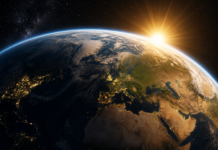
From space, the Pacific may appear calm and endless. Yet beneath its surface, subtle temperature shifts can influence weather systems across entire continents.
Whether the current warming develops into a full El Niño or not, scientists agree on one thing: what happens in the Pacific rarely stays in the Pacific.
The world’s largest ocean remains one of the most powerful forces shaping Earth’s climate—and the planet is watching closely.