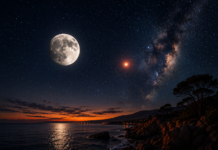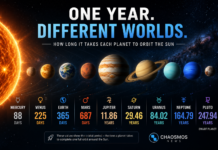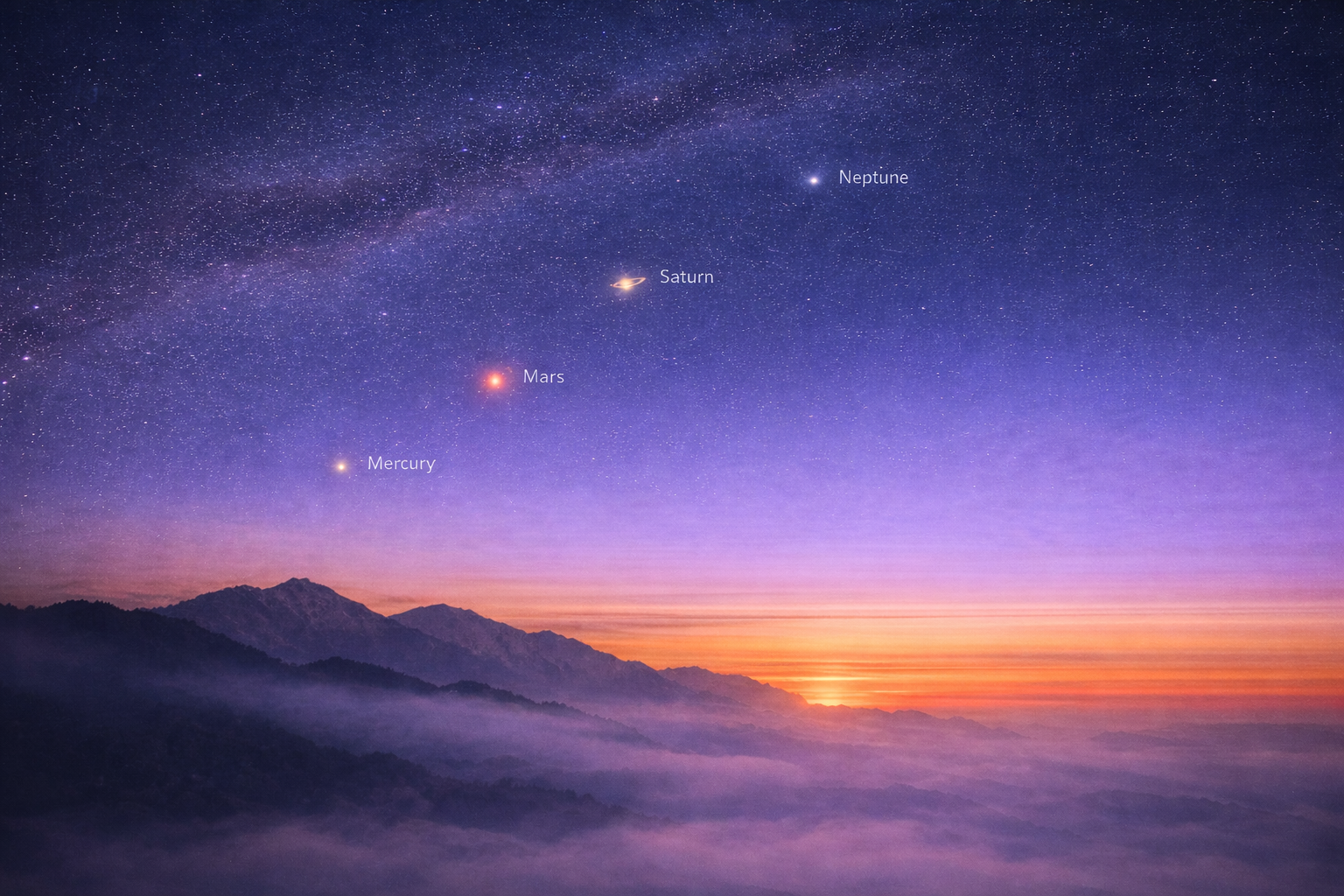
In the early hours of April 18, 2026, skywatchers will have the opportunity to witness a subtle yet beautiful celestial alignment. Four planets — Mercury, Mars, Saturn, and Neptune — will appear grouped together in the morning sky just before sunrise.
While not a perfectly straight line in space, this event — often referred to as a “planetary alignment” or “planet parade” — occurs when planets appear to line up from our perspective on Earth along the ecliptic, the apparent path of the Sun across the sky.What Makes This Alignment Special?
Planetary alignments are not extremely rare, but seeing multiple planets clustered together in the sky at the same time is always a visually striking event — especially when they span different brightness levels and distances from Earth.
In this case:
- Mercury will sit low near the horizon, shining faintly in the glow of dawn
- Mars will stand out with its distinct reddish color
- Saturn will appear as a soft golden point of light
- Neptune, the most distant of the four, will be very dim and difficult to observe without optical aid
This variation in brightness creates a layered, almost three-dimensional look across the sky.
When and Where to Look
The alignment will be visible shortly before sunrise on April 18, with the best viewing window occurring about 30 to 60 minutes before the Sun rises.
Viewing Tips:
- Look toward the eastern horizon
- Choose a location with a clear, unobstructed view
- Avoid city lights — darker skies improve visibility significantly
- Give your eyes time to adjust to the darkness
Because Mercury stays very close to the Sun in the sky, timing is critical. If you look too late, it will be lost in the sunrise glow.
Can You See All Four Planets?
Not all planets in this alignment are equally easy to spot:
- Visible to the naked eye: Mercury (challenging), Mars, Saturn
- Requires binoculars or a telescope: Neptune
Neptune’s faint magnitude makes it nearly invisible without optical aid, especially in brightening twilight.
Understanding Planetary Alignments
Despite the term “alignment,” planets are never actually lined up in a perfect straight line in space. Instead, they orbit the Sun on slightly different planes but remain close enough to the ecliptic plane that they appear aligned from Earth’s perspective.
These apparent groupings are a natural result of the structure of our solar system.
A Moment Worth Waking Up For
Events like this offer more than just a visual treat — they provide a reminder of the vast, dynamic system we are part of. Seeing multiple planets in a single glance connects us directly to the motion of worlds millions to billions of kilometers away.
Even a brief look before sunrise can turn into a memorable experience — especially under clear skies.
Final Thoughts
The April 18 alignment may not be the brightest or most dramatic planetary event, but its quiet elegance is exactly what makes it special.
As the sky transitions from deep blue to the warm tones of sunrise, these distant worlds will briefly share the same stage — a fleeting alignment that rewards those willing to look up early.
Quick Summary
- ? Date: April 18, 2026
- ? Time: 30–60 minutes before sunrise
- ? Direction: Eastern horizon
- ? Planets: Mercury, Mars, Saturn, Neptune
- ? Best viewing: Dark skies, clear horizon