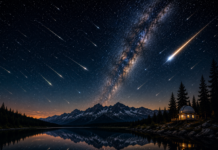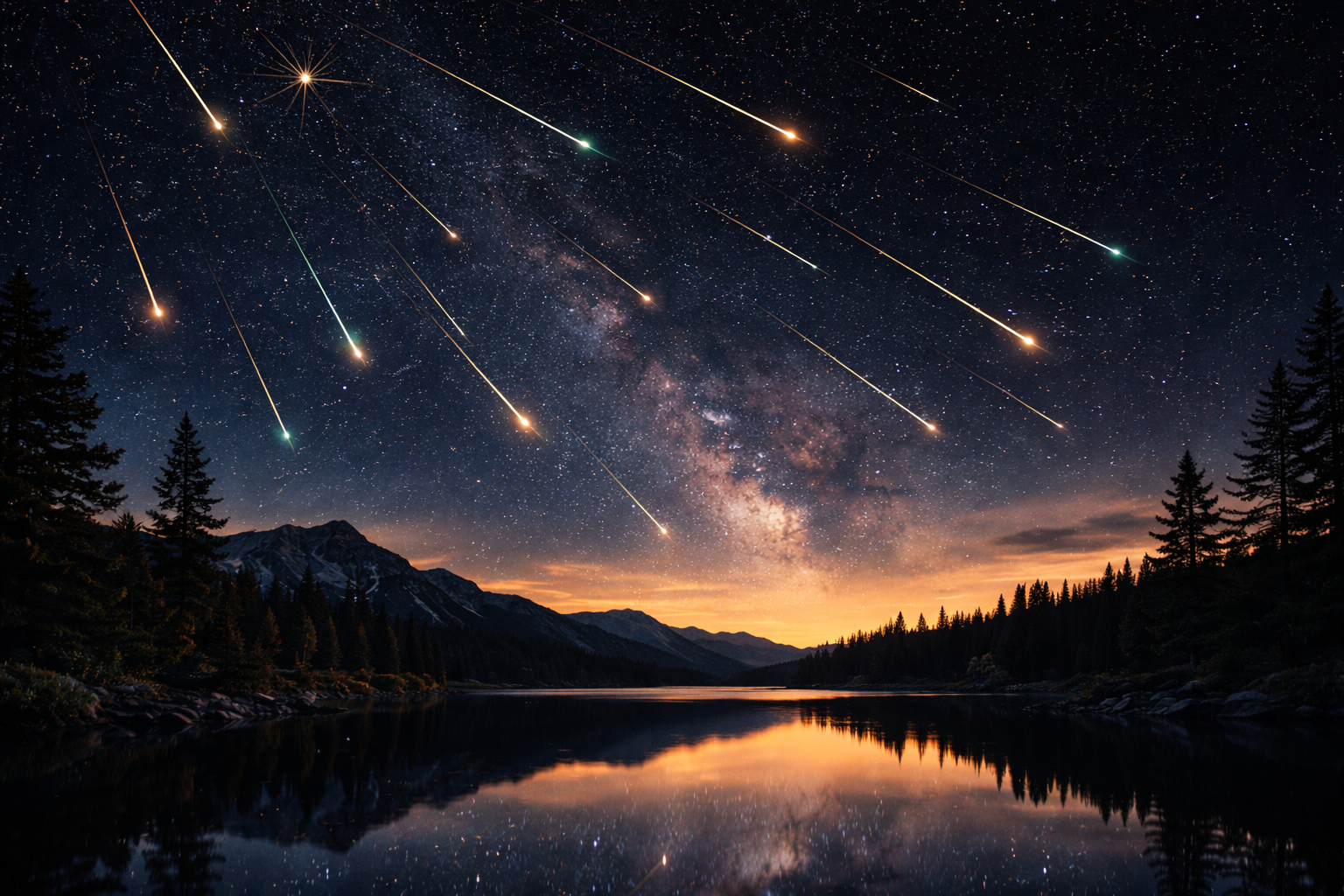
For over 2,500 years, humanity has looked up in April and witnessed one of the most ancient and reliable meteor showers in history — the Lyrids.
Now, in 2026, this timeless celestial event is set to return once again, reaching its peak on the night of April 22 into the early hours of April 23.
✨ What Are the Lyrids?
The Lyrid meteor shower is caused by debris left behind by Comet C/1861 G1 (Thatcher) — a long-period comet that orbits the Sun roughly every 415 years.
As Earth passes through this ancient trail of cosmic dust, tiny particles slam into our atmosphere at speeds of about 49 km/s (30 miles per second).
The result?
Bright streaks of light — what we call meteors — briefly burning across the night sky.
? Why This Shower Is Special
The Lyrids aren’t the most intense meteor shower of the year — but they are among the oldest ever recorded, with observations dating back to 687 BC in ancient China.
And occasionally, they surprise observers.
While the typical rate is around:
- ? 10–18 meteors per hour
There have been rare outbursts where:
- ? Rates surged up to 100 meteors per hour
These unexpected bursts make the Lyrids particularly exciting — you never fully know what the sky might deliver.
? Where Do the Meteors Come From?
The meteors appear to radiate from the constellation Lyra, near the bright star Vega.
But don’t focus too narrowly.
? The best strategy is to:
- Look at a wide, dark portion of the sky
- Avoid directly staring at the radiant point
This allows you to catch longer, more dramatic meteor trails.
⏰ When and How to Watch
? Peak Night: April 22–23
? Best Time: After midnight → before dawn
? Visibility: Northern Hemisphere favored, but visible globally
? Viewing Tips
- Get away from city lights
- Allow 20–30 minutes for your eyes to adjust
- Lie back and look upward comfortably
- No telescope needed — naked eye is best
? Moon Conditions (2026)
This year, the Moon phase is relatively favorable, meaning:
- ? Darker skies
- ? Better visibility of faint meteors
That’s a big advantage compared to years with bright moonlight.
? What Will You See?
Expect:
- Fast, bright meteors
- Occasional fireballs
- Short but sharp streaks
Lyrids are known for producing:
- ✨ Bright flashes
- ⚡ Quick trails (less persistent than some showers)
But when a bright one hits — it’s unforgettable.
? A 2,500-Year-Old Connection
Every Lyrid meteor you see is a fragment of a comet that has been orbiting the Sun for centuries.
Some of that dust may have been drifting through space since before modern civilization even existed.
And for a brief moment — it lights up your sky.
? Final Thought
The Lyrids may not be the most intense meteor shower of the year —
but they carry something even more powerful:
History.
A connection between ancient observers and modern stargazers, all looking up at the same sky.
? Look Up
On the night of April 22–23, step outside, find a dark sky, and take a moment.
Because above you,
a 2,500-year-old cosmic story is unfolding once again.