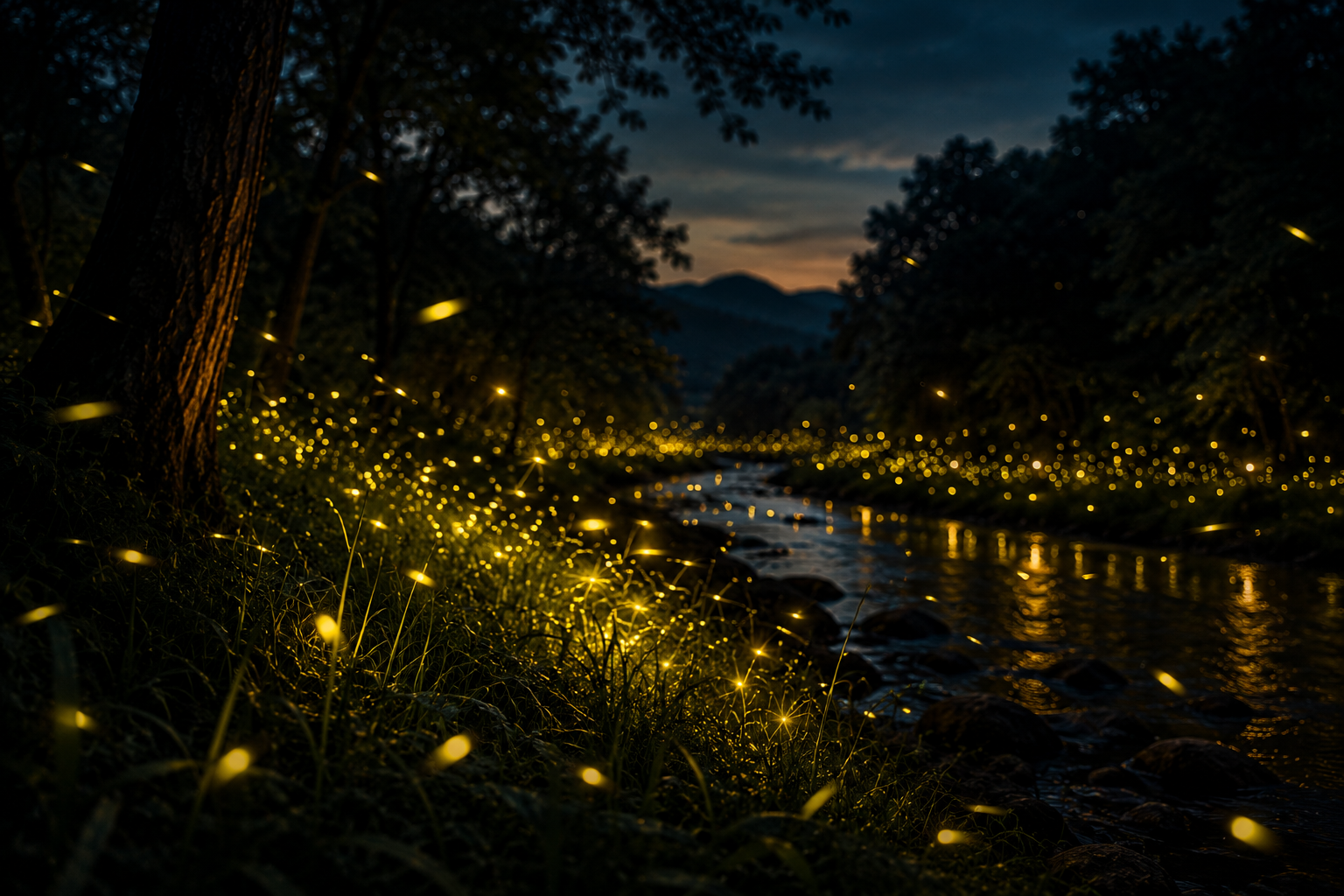
For countless generations, summer nights have been illuminated by one of nature’s most enchanting spectacles. Tiny flashes of golden light drifted across meadows, forests, wetlands, and riverbanks, transforming ordinary landscapes into living galaxies. Fireflies, also known as lightning bugs, have long been symbols of wonder, nostalgia, and the quiet magic hidden within the natural world.
Yet in many regions across the globe, these glowing insects are becoming increasingly rare.
Scientists warn that firefly populations are declining in numerous countries, raising concerns that future generations may grow up in a world where these familiar lights are no longer part of summer evenings. While not every species is endangered, the overall trend has become impossible to ignore.
Nature’s Living Lanterns
Fireflies are not flies at all. They belong to the beetle family and possess one of the most extraordinary abilities in the animal kingdom: bioluminescence.
Through a chemical reaction involving oxygen, luciferin, and specialized enzymes, fireflies create light inside their bodies with remarkable efficiency. Nearly all of the energy is converted into light rather than heat, making their glow one of nature’s most efficient forms of illumination.
Their flashes are more than beautiful displays. They are a language.
Different species use unique flash patterns to communicate, attract mates, and identify one another in the darkness. Entire fields can become synchronized light shows, with thousands of insects blinking in harmony as if responding to an invisible conductor.
Why Are Fireflies Disappearing?
The decline of fireflies is driven by several interconnected factors.
Light Pollution
Perhaps the greatest modern threat comes from artificial lighting.
Streetlights, billboards, buildings, and expanding urban development brighten the night sky to unprecedented levels. Fireflies evolved to communicate through light, but excessive artificial illumination drowns out their signals.
When their flashes become harder to see, finding mates becomes more difficult, reducing reproductive success and gradually shrinking populations.
Habitat Loss
Fireflies depend on healthy ecosystems.
Wetlands, forests, meadows, and natural riverbanks provide ideal conditions for breeding and development. As cities expand and agricultural lands replace wild habitats, many firefly species lose the environments they need to survive.
A field transformed into a parking lot may seem insignificant, but for a local firefly population, it can mean extinction.
Pesticides and Chemical Pollution
Many firefly species spend most of their lives as larvae beneath the soil or within leaf litter.
These hidden stages can last for months or even years. During this time, larvae are highly vulnerable to pesticides and chemical contamination.
Modern agricultural practices often eliminate not only harmful insects but also countless beneficial species, including fireflies.
Climate Change
Changing weather patterns are creating additional challenges.
Droughts, floods, shifting temperatures, and altered seasonal cycles can disrupt breeding behaviors and damage fragile ecosystems where fireflies thrive.
As climate instability increases, some species may struggle to adapt quickly enough.
A Warning Beyond Fireflies
The disappearance of fireflies represents something larger than the loss of a beautiful insect.
Their decline is part of a broader reduction in global insect populations. Scientists have documented alarming decreases in pollinators, beetles, butterflies, and other critical species that support ecosystems around the world.
Insects pollinate crops, recycle nutrients, support food webs, and help maintain ecological balance. When they disappear, the effects ripple through entire environments.
Fireflies serve as a visible reminder of a much deeper environmental shift.
Can Their Lights Be Saved?
The future of fireflies is not yet written.
Simple actions can make a meaningful difference:
• Reducing unnecessary outdoor lighting.
• Protecting wetlands and natural habitats.
• Limiting pesticide use.
• Preserving native vegetation.
• Supporting conservation initiatives focused on biodiversity.
In some regions, communities have already begun creating “dark sky” zones and restoring habitats specifically designed to support firefly populations.
These efforts demonstrate that decline is not inevitable.
The Last Glow?
There may never be a moment when someone can identify the final firefly on Earth.
No headlines will announce the last flash. No alarm will sound when a meadow grows dark for the final time.
Instead, the lights may simply become fewer each year until one generation realizes that something magical has quietly vanished.
Fireflies remind us that nature’s greatest wonders are often its smallest.
And perhaps their fading glow carries a message for humanity itself:
Protect the darkness. Protect the wild. Protect the fragile beauty that makes our planet feel alive.
Because once the lights go out, we may never see them shine again.