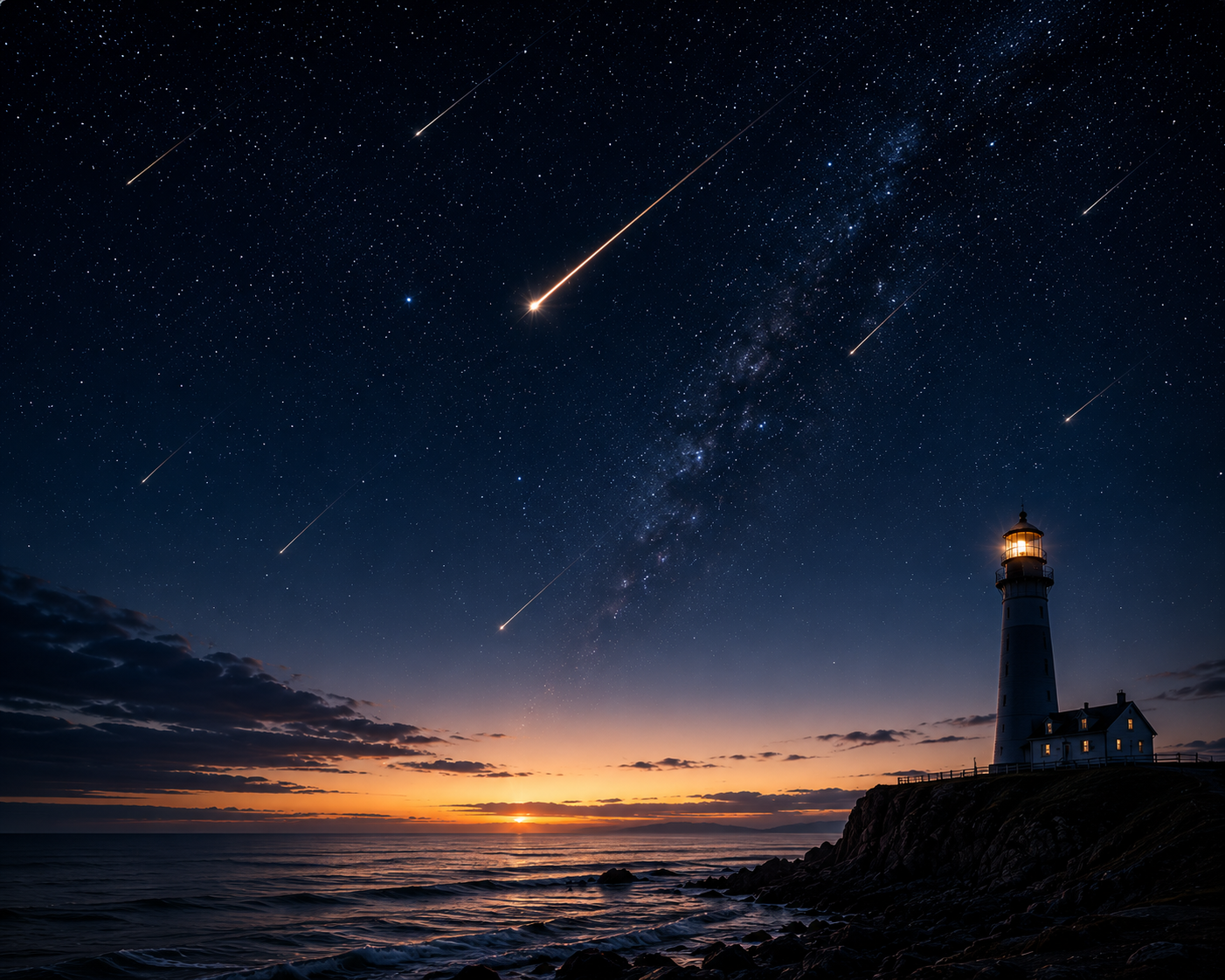
While most meteor showers are best known for lighting up the night sky, the Arietids are different. They are considered one of the strongest meteor showers on Earth, yet most people have never heard of them. The reason is simple: their peak activity occurs during daylight hours, hidden by the Sun’s overwhelming brightness.
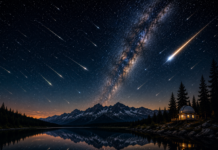
Each year in early June, Earth passes through a stream of debris left behind by a comet-like object known as 1566 Icarus and possibly other related bodies. As these tiny fragments collide with our atmosphere at incredible speeds, they burn up and create the brief flashes of light we call meteors.
???? Watch: Learn how and when to spot the Arietids Meteor Shower before sunrise in this short video guide:
The Arietids are classified as a daytime meteor shower because their radiant—the point from which the meteors appear to originate—lies close to the Sun in the sky. This makes direct observation difficult. However, a small window of opportunity exists just before sunrise, when the radiant rises above the eastern horizon while the sky is still dark enough for a handful of meteors to become visible.
A Hidden Giant Among Meteor Showers
Radar observations suggest that the Arietids may actually produce more meteors than famous showers such as the Perseids or Geminids. Most of these meteors are invisible to the naked eye because they streak across a bright daytime sky. Specialized radar systems detect hundreds of Arietid meteors every day during the shower’s peak.
For observers willing to wake before dawn, the reward can be impressive. Fast-moving meteors often leave bright trails and occasionally produce fireballs that briefly outshine the surrounding stars.
When and Where to Watch
The best viewing time is during the final hour before sunrise. Find a location with a clear eastern horizon and as little artificial light as possible. Allow your eyes to adjust to the darkness and be patient. Meteor showers are unpredictable; several meteors may appear within minutes, followed by long periods of quiet.
Unlike many astronomical events, no telescope or binoculars are required. In fact, the wider your view of the sky, the better your chances of spotting a meteor.
A Reminder of Earth’s Cosmic Journey
Every meteor shower is evidence that Earth is not simply orbiting the Sun in isolation. Our planet continuously travels through ancient trails of dust and debris scattered throughout the Solar System. The Arietids offer a glimpse into this hidden cosmic environment—a reminder that even on an ordinary morning, our world is moving through a vast and dynamic universe.
Before sunrise, while darkness still lingers on the horizon, look up. The Arietids may only appear for a few brief moments, but those fleeting streaks of light are fragments of cosmic history burning high above our heads.