Every year, Earth passes through streams of cosmic debris left behind by ancient comets. Most meteor showers are predictable. Astronomers know roughly how many meteors to expect, when they will appear, and how bright they will be.
The June Bootids are different.
This little-known meteor shower has earned a reputation as one of the most unpredictable sky events on Earth. In some years, observers see only a handful of meteors per hour. In other years, the shower suddenly erupts into an unexpected celestial display, producing dozens or even hundreds of meteors in a single night.
That uncertainty is exactly what makes the June Bootids so fascinating.
A Meteor Shower With a Cometary Origin
The June Bootids originate from debris left behind by Comet 7P/Pons–Winnecke, a short-period comet that orbits the Sun approximately every 6.4 years.
As the comet travels through the Solar System, it sheds tiny fragments of dust and rock. Over time, these particles spread out along the comet’s orbital path. Each June, Earth crosses portions of this debris stream, causing the particles to enter our atmosphere at tremendous speeds.
When these tiny fragments collide with Earth’s atmosphere, friction heats them to thousands of degrees, creating the bright streaks of light we call meteors.
Most of the particles are no larger than grains of sand, yet they can produce spectacular flashes visible from hundreds of kilometers away.
Why the June Bootids Are So Unpredictable
Unlike famous meteor showers such as the Perseids or Geminids, the June Bootids do not produce consistent annual activity.
The reason lies in the complex behavior of Comet Pons–Winnecke’s debris trail.
Gravitational interactions with planets—especially Jupiter—can alter the distribution of the dust stream over time. As a result, Earth may pass through a sparse region of debris one year and a dense concentration the next.
This unpredictability has led to several historic outbursts.
In 1916, observers reported unusually high meteor rates. Another major surprise occurred in 1998 when activity suddenly surged, catching astronomers off guard. Similar outbursts were observed in subsequent years, reinforcing the shower’s reputation as one of the most erratic meteor displays known.
What to Expect in 2026
The June Bootids are expected to peak around June 22, 2026.
Most forecasts suggest modest activity, but the history of this shower reminds astronomers that surprises are always possible.
Unlike many meteor showers, the June Bootids are relatively slow-moving. Their meteors enter Earth’s atmosphere at about 18 kilometers per second, making them noticeably slower than the swift streaks produced by showers such as the Perseids.
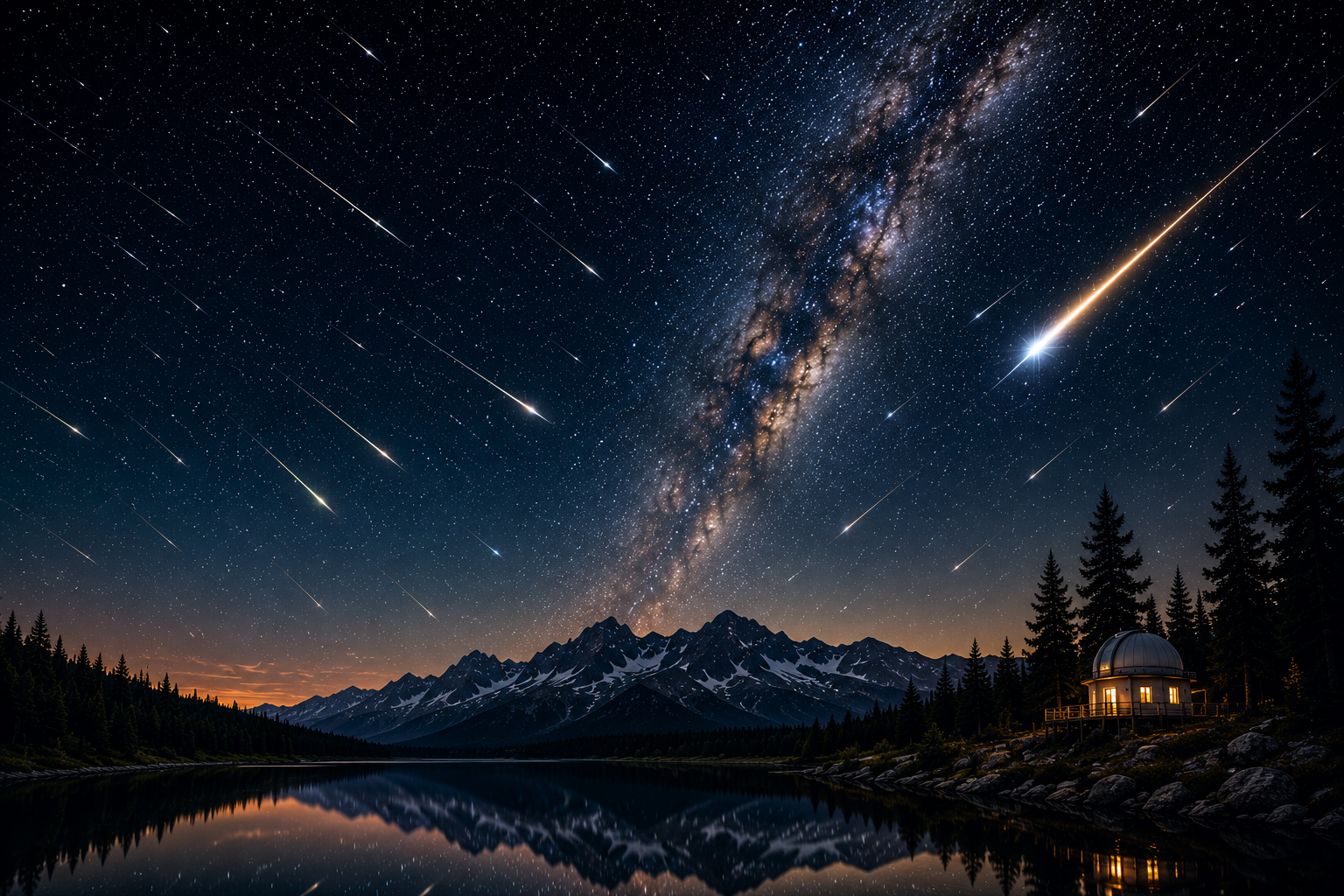
This slower speed often results in graceful, lingering trails that can be particularly beautiful under dark skies.
Even if activity remains low, a single bright meteor crossing the Milky Way can make an entire night of observing worthwhile.
Best Viewing Conditions
The best way to observe the June Bootids is surprisingly simple:
- Find a dark location away from city lights.
- Allow your eyes 20–30 minutes to adapt to the darkness.
- Avoid looking at phone screens.
- Watch as much of the sky as possible rather than focusing on a single point.
The shower’s radiant—the point from which the meteors appear to emerge—is located in the constellation Boötes, which gives the shower its name.
However, meteors can appear anywhere across the sky.
Patience is often rewarded.
A Reminder of Our Place in the Cosmos
Meteor showers are among the most accessible astronomical events. No telescope is required. No special equipment is necessary.
All that is needed is a clear sky and a willingness to look up.
The June Bootids carry an additional lesson. They remind us that nature does not always follow our expectations. Even in an age of advanced astronomy and sophisticated computer models, some celestial events continue to surprise us.
For a few hours on a June night, fragments of an ancient comet may paint brief lines of light across the darkness—tiny reminders that Earth is constantly moving through a dynamic and ever-changing Solar System.
Whether the June Bootids produce only a handful of meteors or an unexpected outburst, the sky above us remains one of the greatest spectacles on our planet.
And sometimes, the most memorable nights are the ones no one can fully predict.