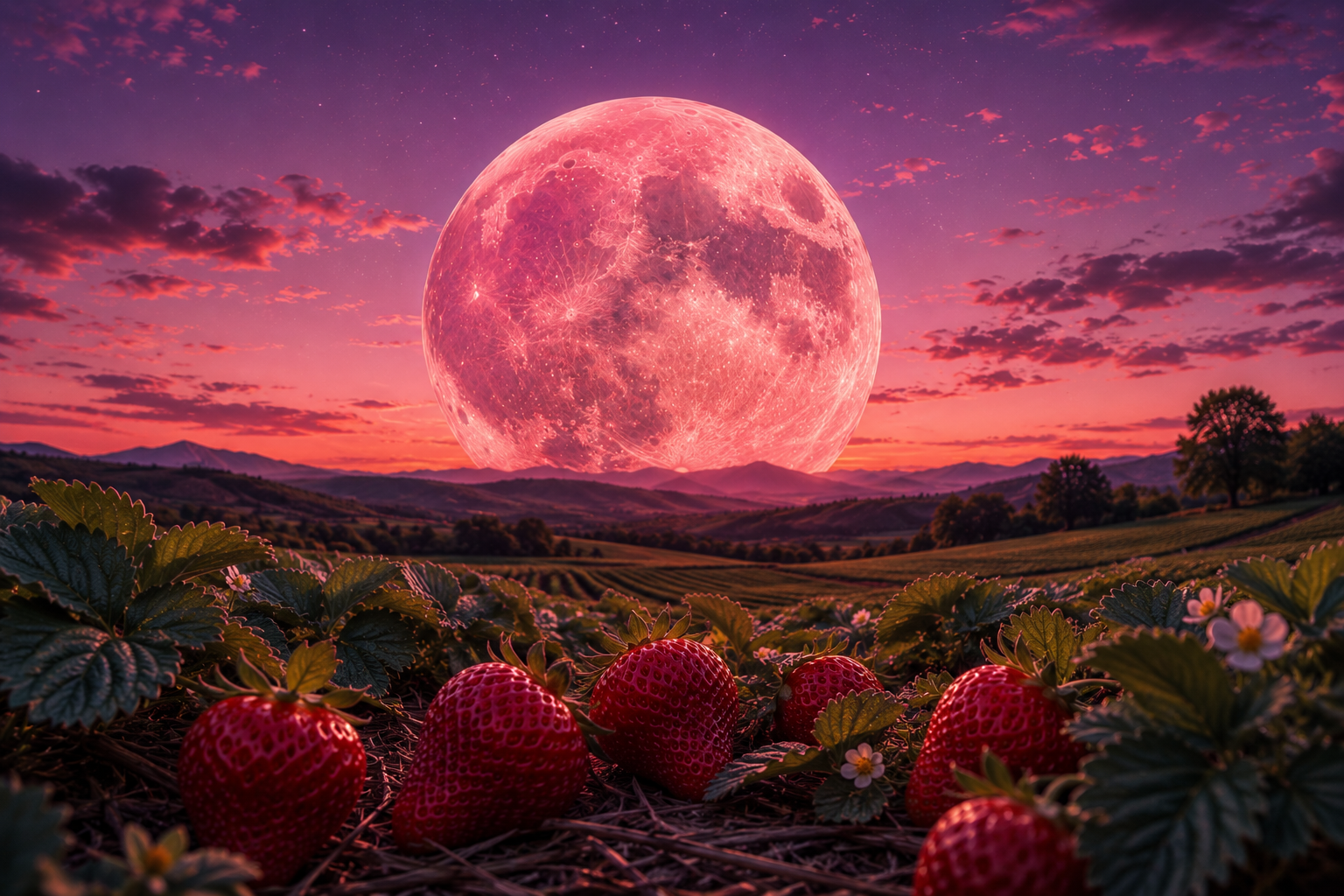
Every year, the full moons of summer bring a unique atmosphere to the night sky. Among them, none carries quite the same charm as the Strawberry Moon.
On June 29, 2026, skywatchers around the world will witness the arrival of this beloved full moon, a celestial event that blends astronomy, history, and seasonal tradition into a single luminous moment.
A Name Rooted in the Earth
Despite what many people assume, the Strawberry Moon is not named for its color.
The name originates from Indigenous peoples of North America, who used the June full moon as a seasonal marker for the brief strawberry harvesting period. For generations, the moon served as a natural calendar, helping communities track the changing rhythms of the year.
Over time, the name endured and became one of the most recognized full moon names in modern astronomy.
Not Actually Pink
One of the most common misconceptions is that the Strawberry Moon will appear bright pink or red.
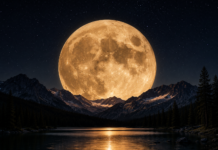
In reality, the moon’s color remains the same as any other full moon. However, when it rises near the horizon, Earth’s atmosphere can scatter shorter wavelengths of light, causing the moon to appear golden, orange, or even slightly reddish.
These warm tones often create the illusion that the Strawberry Moon is living up to its colorful name.
A Rare Micromoon
The 2026 Strawberry Moon is also notable because it will be a micromoon.
A micromoon occurs when a full moon happens near the point in the Moon’s orbit where it is farthest from Earth, known as apogee.
As a result, the moon will appear slightly smaller and dimmer than an average full moon.
The difference is subtle and difficult to notice without comparison, but it provides an interesting contrast to the more widely known supermoons, which appear slightly larger due to their closer distance.
Why June Moonrises Feel Special
June moonrises often coincide with some of the year’s most beautiful evenings.
In many regions, the full moon rises shortly after sunset, illuminating landscapes still glowing with the final colors of twilight. The combination of warm summer air, long days, and soft moonlight creates an atmosphere that feels almost timeless.
Unlike meteor showers or eclipses, the Strawberry Moon requires no planning, no telescope, and no special equipment.
All it asks is that we step outside and look up.
A Reminder from the Cosmos
Modern astronomy often focuses on the spectacular—exploding stars, distant galaxies, and planets beyond our Solar System.
Yet some of the most meaningful celestial events are also the simplest.
The Strawberry Moon is not the brightest moon of the year. It is not the largest. It is not the rarest.
But it remains one of the most anticipated because it connects the sky above us to the seasons below us.
For countless generations, people have watched this moon rise over forests, mountains, rivers, and fields, marking the arrival of summer and the passing of time.
On June 29, 2026, that tradition continues.
And for one quiet night, the Moon will once again remind us that even familiar sights can still inspire wonder.
—
ChaosmosNews
Exploring the Universe, One Story at a Time.