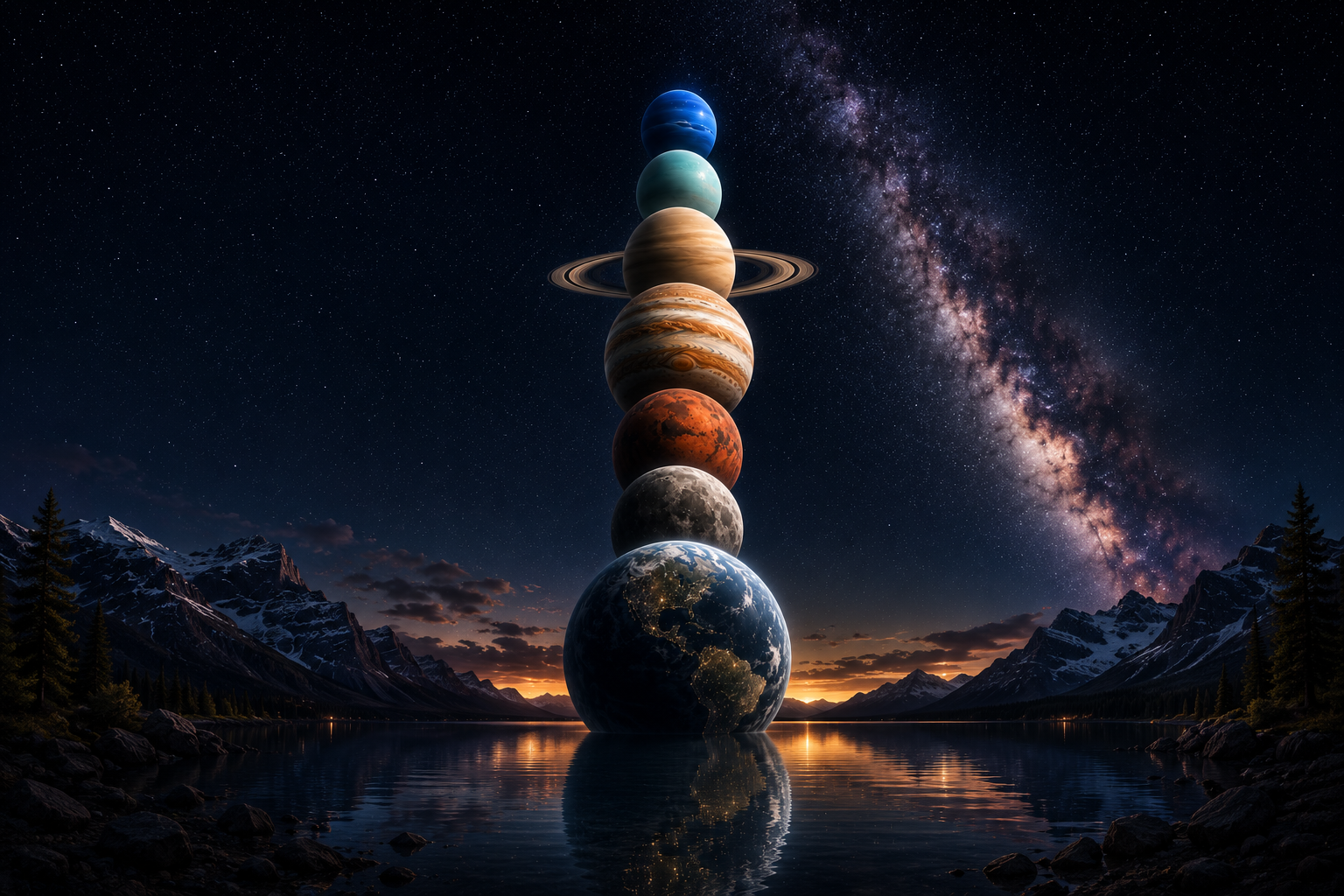
Every so often, the night sky offers a reminder that we are part of something much larger than ourselves.
This week is one of those moments.
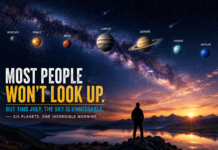
As darkness falls across Earth between June 15 and June 21, several planets will share the evening sky, creating the impression of a quiet gathering of worlds. While the planets are separated by hundreds of millions—even billions—of kilometers in space, our perspective from Earth causes them to appear arranged along a similar path across the heavens.
For skywatchers, it is a beautiful coincidence of celestial geometry.
Why Do the Planets Appear to Gather?
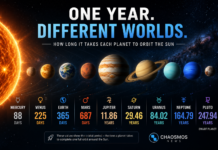
All of the major planets orbit the Sun within roughly the same flat plane, known as the ecliptic plane. When viewed from Earth, this creates an invisible highway across the sky that the Sun, Moon, and planets seem to follow.
As the planets move through their individual orbits, there are times when several appear on the same side of the Sun from our perspective. When this happens, they can be seen sharing the same region of the sky, producing what astronomers often call a planetary alignment or planetary parade.
The worlds are not actually close together.
Instead, we are witnessing a line-of-sight effect that transforms vast distances into a stunning visual display.
A Week of Worlds
Throughout the week, observers may spot multiple planets shining in the twilight and evening sky.
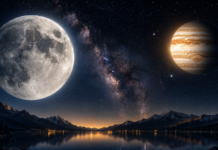
Mercury, often difficult to see because of its proximity to the Sun, briefly becomes visible low above the horizon. Venus shines brilliantly as one of the brightest objects in the sky. Jupiter dominates the evening hours with its unmistakable golden glow, while other planets contribute to the sense of a crowded celestial stage.
To the casual observer, the planets may resemble bright stars.
Yet each point of light is an entire world.
Some are rocky landscapes scarred by ancient impacts. Others are giant spheres of gas large enough to swallow Earth hundreds of times over. Together, they remind us of the immense diversity of our Solar System.
The Return of the Milky Way
The planetary gathering is not the only reason to look up this week.
June also marks one of the best periods of the year for viewing the Milky Way.
As moonlight fades and summer nights grow warmer, the bright central regions of our galaxy begin to dominate the night sky. Under dark conditions, the Milky Way appears as a luminous river stretching from horizon to horizon.
What looks like a faint cloud is actually the combined glow of billions of distant stars.
Hidden within that glow are stellar nurseries, ancient star clusters, dark nebulae, and perhaps countless worlds still waiting to be discovered.
The Summer Solstice Approaches
This week also brings us closer to the Summer Solstice, the moment when the Northern Hemisphere experiences its longest day of the year.
For thousands of years, civilizations have marked this seasonal turning point with celebrations, monuments, and astronomical observations. The solstice serves as a reminder that our experience of time is deeply connected to Earth’s journey around the Sun.
Even today, the changing angle of sunlight continues to shape our seasons, weather, and rhythms of life.
A Quiet Cosmic Reminder
In an age filled with notifications, headlines, and distractions, the sky moves at its own pace.
The planets continue their ancient journeys.
The Milky Way continues its slow rotation around the galactic center.
Earth continues its orbit around the Sun.
And above us, the universe continues to unfold.
This week offers no explosions, no eclipses, and no dramatic celestial collisions. Instead, it offers something quieter: a chance to witness multiple worlds sharing the same sky and to remember that we live on one small planet among many.
Step outside after sunset.
Give your eyes a few moments to adjust.
Then look up.
The planets are gathering.