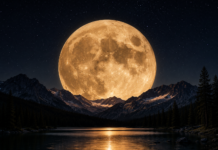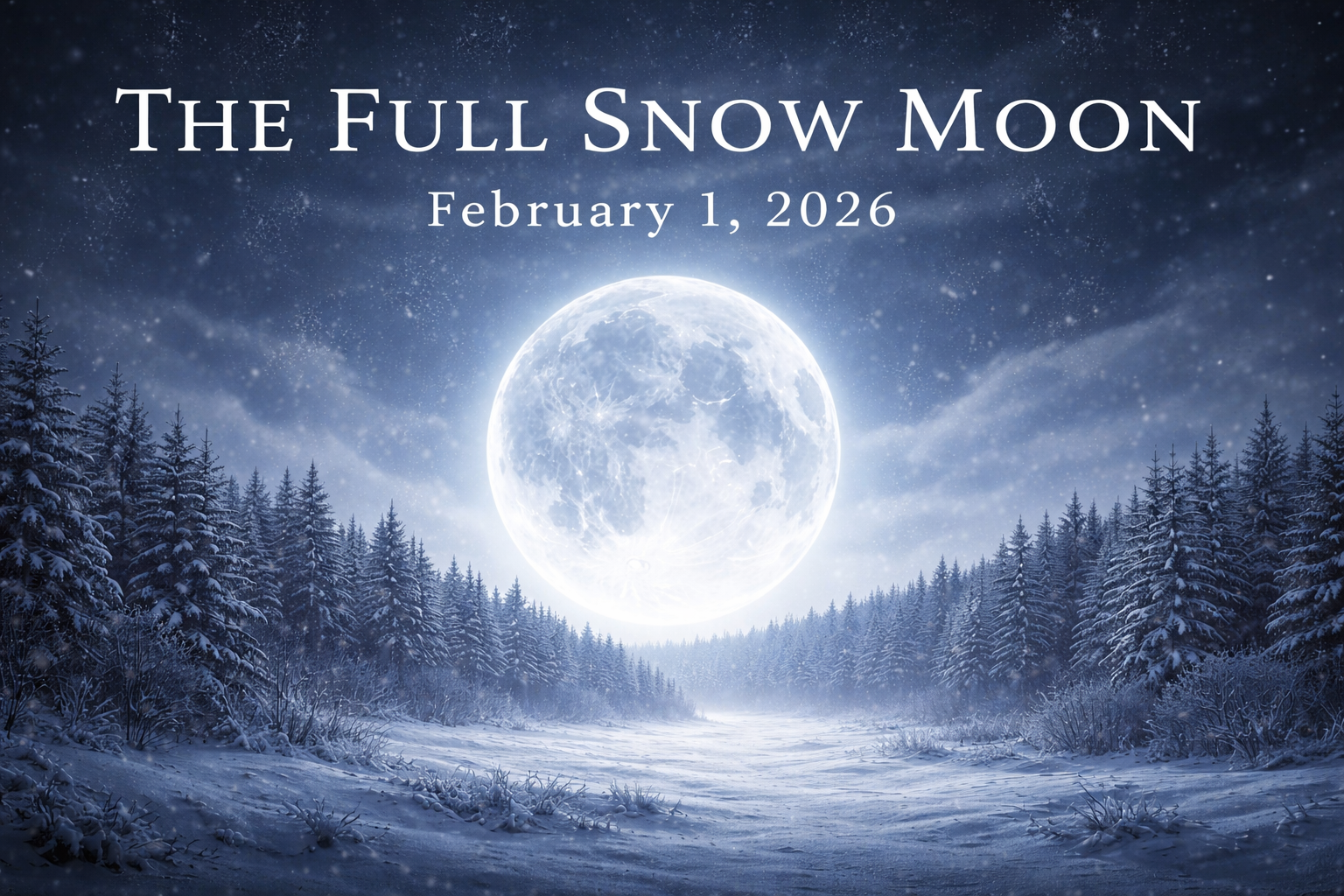
On the night of February 1, 2026, the Full Snow Moon will rise into the winter sky, illuminating snow-covered landscapes with a cold, steady light. Appearing during the heart of winter in the Northern Hemisphere, this full Moon marks a time when nature slows, temperatures drop, and the night sky reveals its quiet precision.
What Is a Full Moon?
Astronomically, a full Moon occurs when the Moon is positioned directly opposite the Sun, with Earth in between. During this alignment, sunlight fully illuminates the Moon’s Earth-facing side, creating the bright, circular disk that appears once every lunar cycle.
This cycle repeats approximately every 29.5 days, known as a synodic month. While the geometry behind a full Moon is simple, the visual impact is powerful — especially in winter, when atmospheric conditions often enhance clarity and contrast.
Why Is It Called the Snow Moon?
The name Snow Moon originates from seasonal observations made long before the use of modern calendars. For centuries, people relied on the Moon to track time, weather, and survival conditions.
February is typically the snowiest month across much of the Northern Hemisphere. Heavy snowfall, frozen ground, and persistent cold defined this period, making the Snow Moon a natural marker of winter’s most challenging phase.
Other traditional names for this Moon reflect similar conditions, emphasizing scarcity, endurance, and the deep cold of late winter.
Why the Snow Moon Appears So Bright
Winter skies often create ideal viewing conditions for the Moon. Cold air holds less moisture and fewer airborne particles, reducing atmospheric distortion. As a result, moonlight appears sharper, clearer, and more intense than during warmer seasons.
Snow-covered landscapes further amplify this effect. Snow reflects a large portion of incoming light, increasing overall brightness and producing long, dramatic shadows. Under a Full Snow Moon, even familiar terrain can appear transformed, glowing softly beneath lunar illumination.
A Moment of Stillness in Earth’s Motion
While the Snow Moon rises quietly, the cosmic mechanics behind it are anything but still. Earth continues its orbit around the Sun at nearly 30 kilometers per second, while the Moon travels its own path around Earth at over 1 kilometer per second.
Yet from the ground, everything feels calm. The Snow Moon highlights the contrast between constant motion in space and stillness on Earth — a reminder of the balance maintained by gravity, distance, and time.
Cultural Meaning and Seasonal Reflection
Across cultures, winter full Moons were often associated with endurance and patience. Food was scarce, travel was difficult, and survival depended on careful planning. The Snow Moon symbolized both hardship and continuity — proof that the natural cycles continued, even in the coldest darkness.
Today, the Snow Moon offers a similar moment of reflection. It invites us to pause, observe, and recognize the quiet rhythms that shape our planet and our place in the cosmos.
When and How to Observe the Full Snow Moon
The Full Snow Moon will be visible throughout the night on February 1, 2026, rising around sunset and setting near sunrise. It can be observed with the naked eye, binoculars, or a small telescope.
No special equipment is required — only a clear horizon and patience. For the best experience, observing from a snow-covered or open area can enhance the Moon’s brightness and atmosphere.
A Familiar Light in the Deepest Winter
The Full Snow Moon stands as one of winter’s most striking celestial events. Cold, bright, and unwavering, it bridges the past and present — a reminder that while seasons change and landscapes freeze, the Moon’s cycle remains constant.
In the quiet of winter’s deepest night, the Snow Moon continues its timeless journey, illuminating Earth with the same light seen by countless generations before us.
Look up — and let winter speak through moonlight.