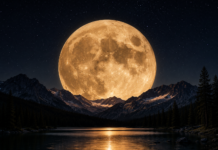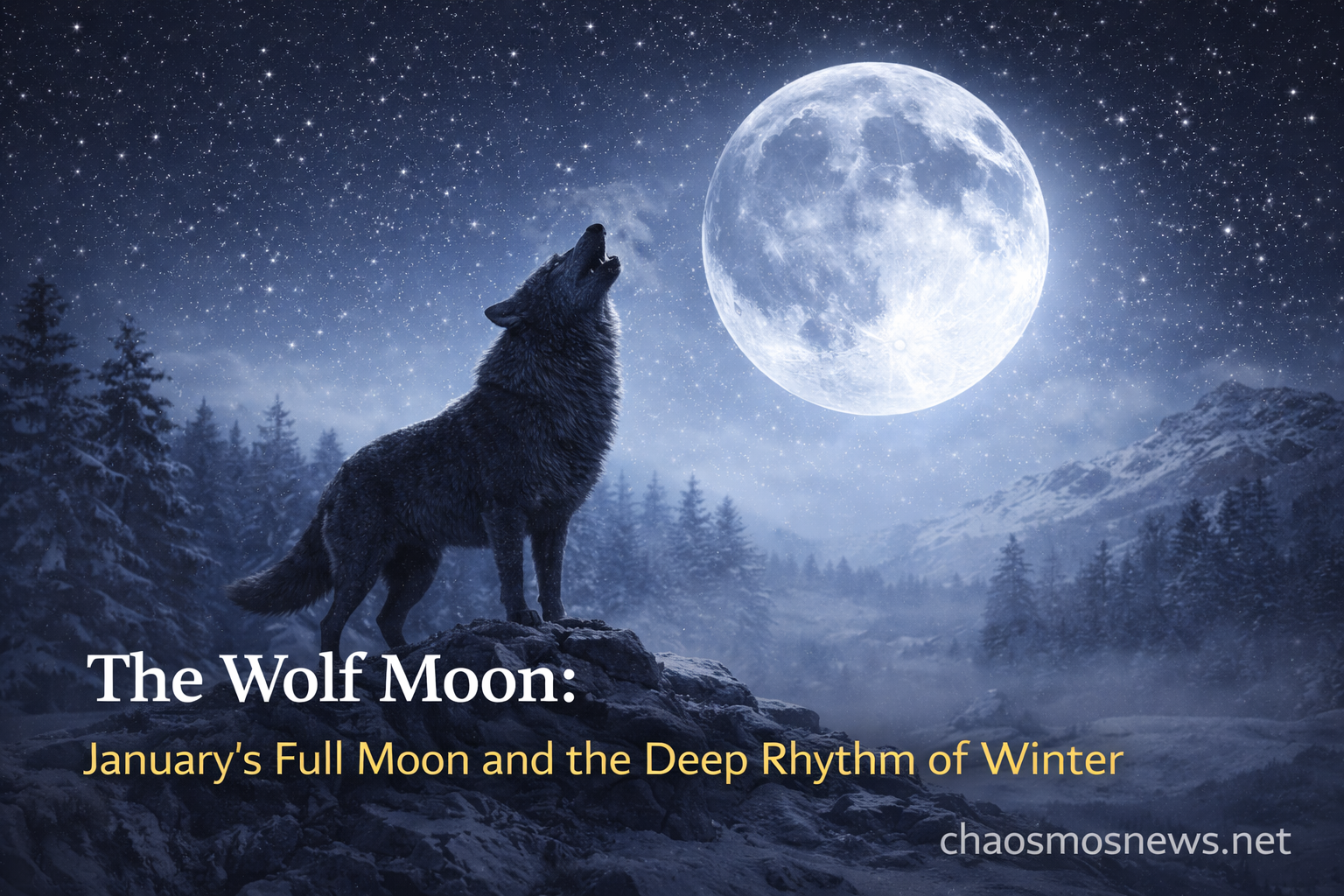
Every year, the first full Moon of January rises with a special name and a long history behind it: the Wolf Moon. In 2026, this full Moon occurs on January 3, marking not only the first lunar cycle of the year but also a Supermoon, appearing slightly larger and brighter as it reaches perigee — its closest point to Earth.
But the Wolf Moon is more than a visual event. It is a symbol shaped by climate, survival, and humanity’s oldest relationship with the night sky.
Why Is It Called the Wolf Moon?
The name Wolf Moon comes from traditional winter observations in the Northern Hemisphere. January marks the heart of winter, when cold temperatures, deep snow, and long nights dominate the landscape.
Historically, wolves were often heard howling more frequently during this time of year. Contrary to popular myth, wolves do not howl because of hunger alone — they howl to communicate, mark territory, and maintain social bonds. The still, cold winter air carries sound farther, making their calls more noticeable.
Over time, this seasonal soundscape became linked to January’s full Moon, giving rise to the name Wolf Moon.
The Wolf Moon as a Supermoon
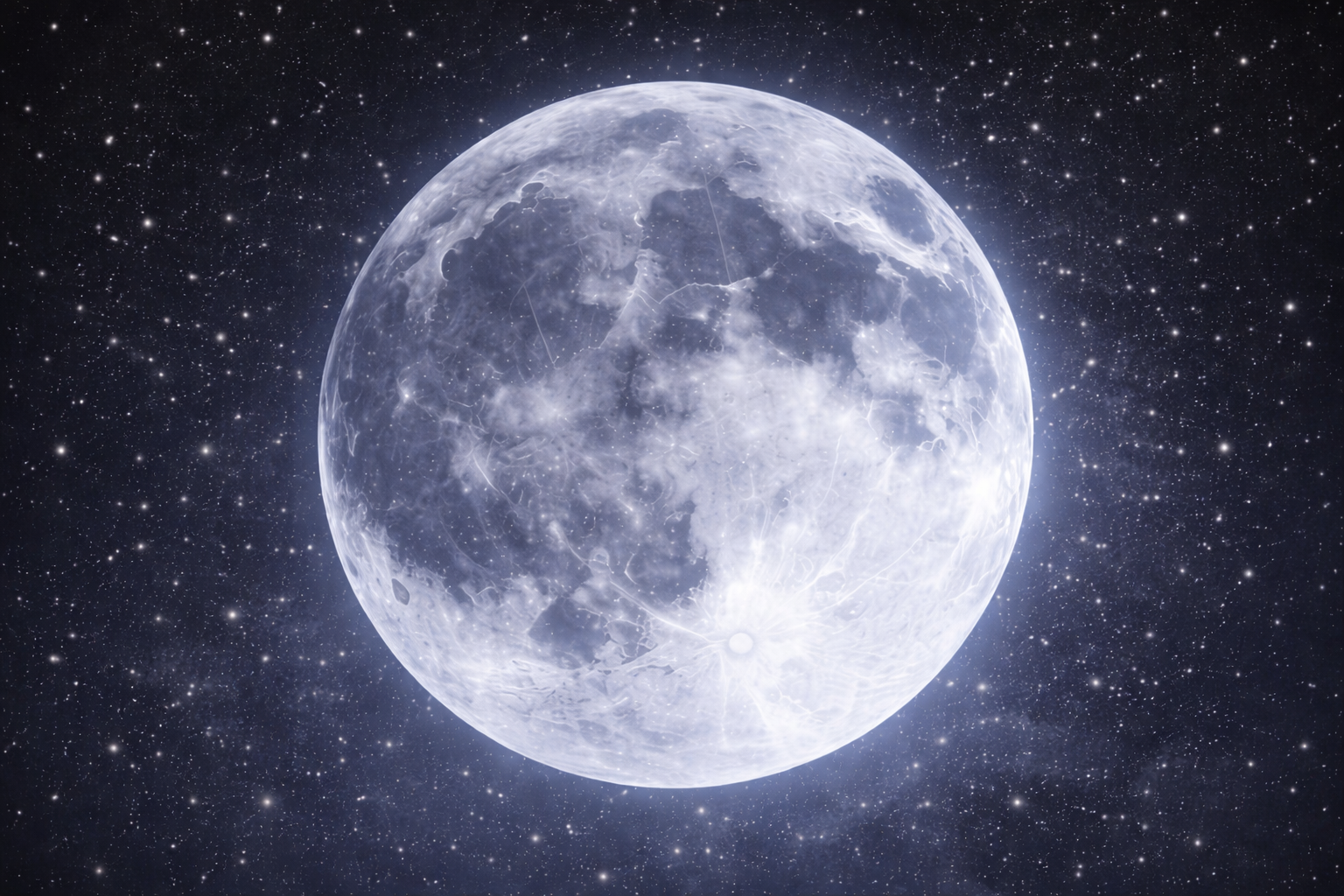
In 2026, the Wolf Moon is also classified as a Supermoon. This occurs when a full Moon coincides with perigee, the point in the Moon’s orbit when it is closest to Earth.
As a result:
-
The Moon appears up to 7–8% larger
-
Brightness increases by up to 15%
-
Lunar surface details become more noticeable, especially near moonrise
While the size difference is subtle to the naked eye, the overall presence of the Moon feels stronger, more luminous, and more immersive.
Winter Skies and Ancient Observation
Cold winter nights often bring clearer skies. With lower humidity and steadier air, January full Moons tend to appear sharper and more defined than those seen in warmer months.
Across Kurdistan, Rojava, and the ancient lands of Mesopotamia, the Moon has long served as a natural calendar. Seasonal changes, agricultural timing, travel, and night navigation were once guided by lunar cycles. The Wolf Moon marked a critical midpoint of winter — a reminder of endurance, patience, and the slow return of light.
The same Moon observed by early civilizations thousands of years ago continues to rise unchanged, following the same gravitational rhythm between Earth, Moon, and Sun.
A Moment to Look Up
The Wolf Moon is not rare, but it is meaningful. It connects astronomy with ecology, history, and human perception. It reminds us that even in the coldest, darkest season, the sky remains alive with motion and balance.
Whether viewed from mountains, coastlines, cities, or open plains, the Wolf Moon invites a pause — a moment to look up and witness the quiet precision of the cosmos.