The Pink Moon and the Flower Moon mark the beautiful transition of spring
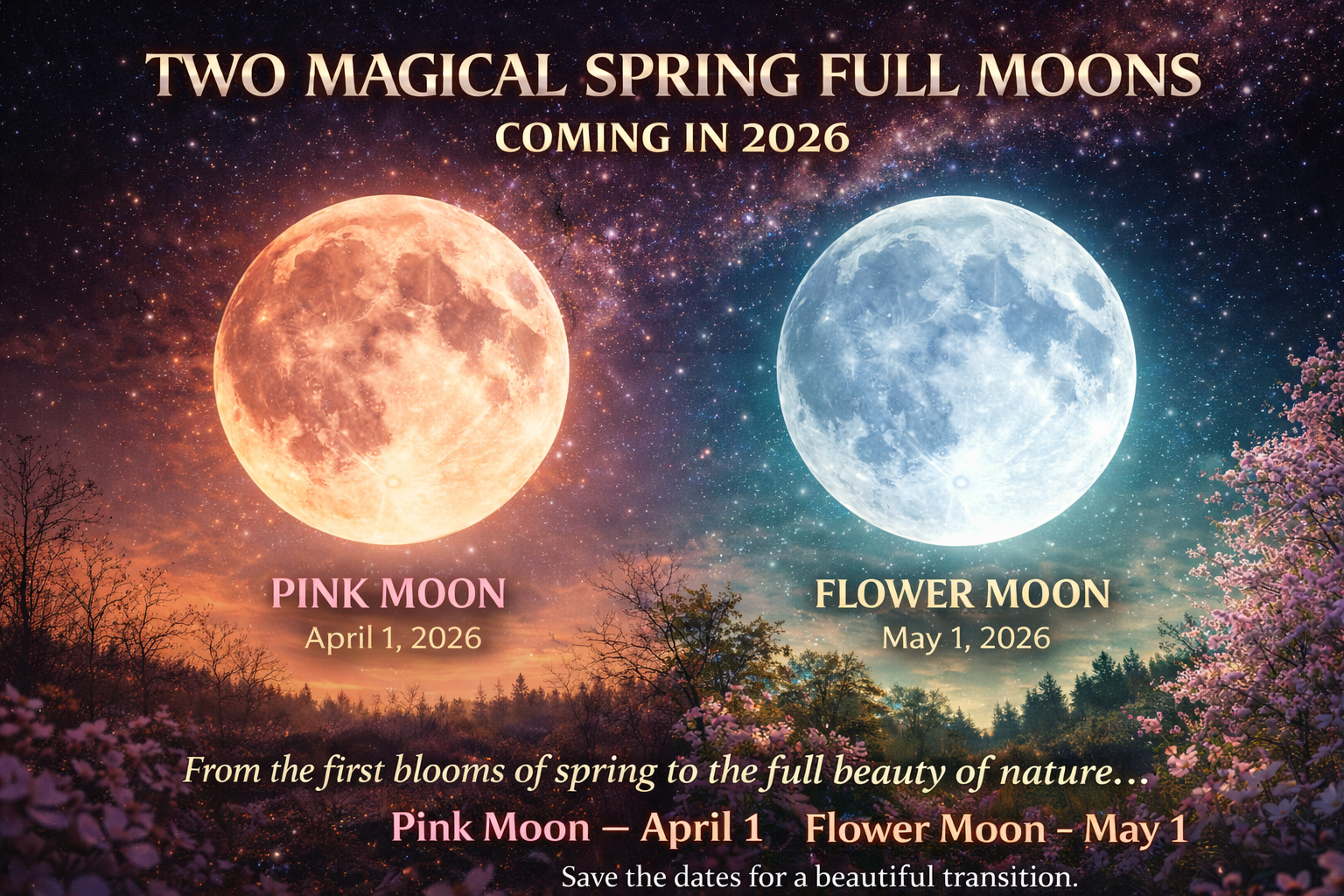
Every spring, the night sky offers a quiet but breathtaking reminder of nature’s rhythm. In 2026, two stunning full moons will rise one month apart, symbolizing the gradual awakening of the natural world — from the first fragile blooms of early spring to the vibrant explosion of flowers that follow.
Known as the Pink Moon and the Flower Moon, these two full moons have been celebrated for centuries in seasonal calendars, folklore, and astronomy traditions. Together, they mark one of the most poetic transitions in the lunar cycle.
? The Pink Moon — April 1, 2026
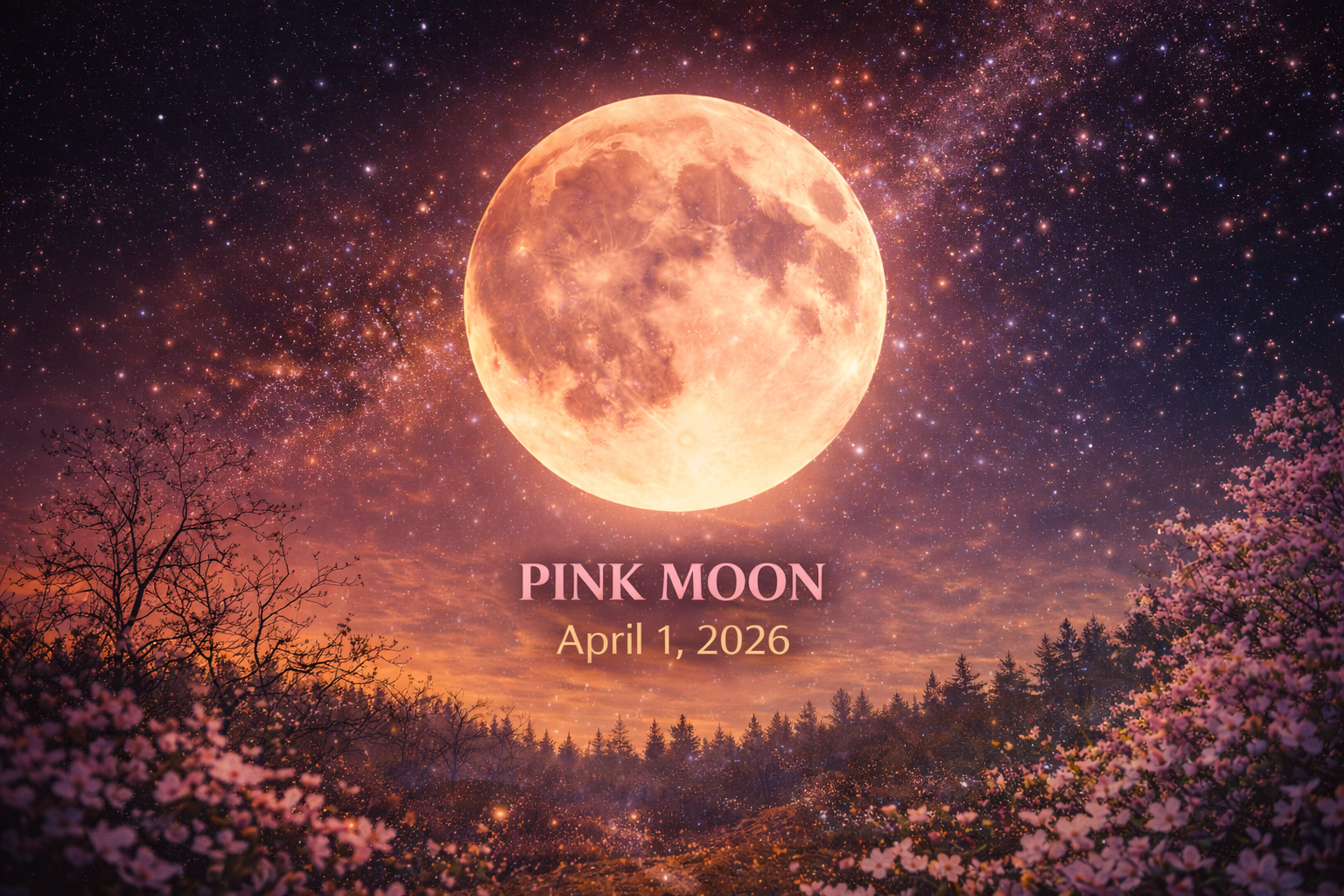
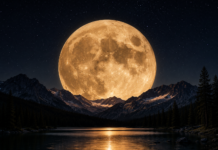
The first of these celestial events arrives on April 1, 2026, when the Pink Moon will illuminate the night sky.
Despite its name, the Moon will not actually appear pink. The name comes from early Native American seasonal traditions and was later popularized by the Farmer’s Almanac. It refers to the blooming of a wildflower known as creeping phlox, one of the earliest flowers to appear in spring across North America.
As winter fades and the days grow longer, the Pink Moon rises as a symbol of renewal and fresh beginnings.
Across forests, fields, and mountains, nature begins to awaken — and the April full moon becomes a quiet companion to this seasonal transformation.
? The Flower Moon — May 1, 2026
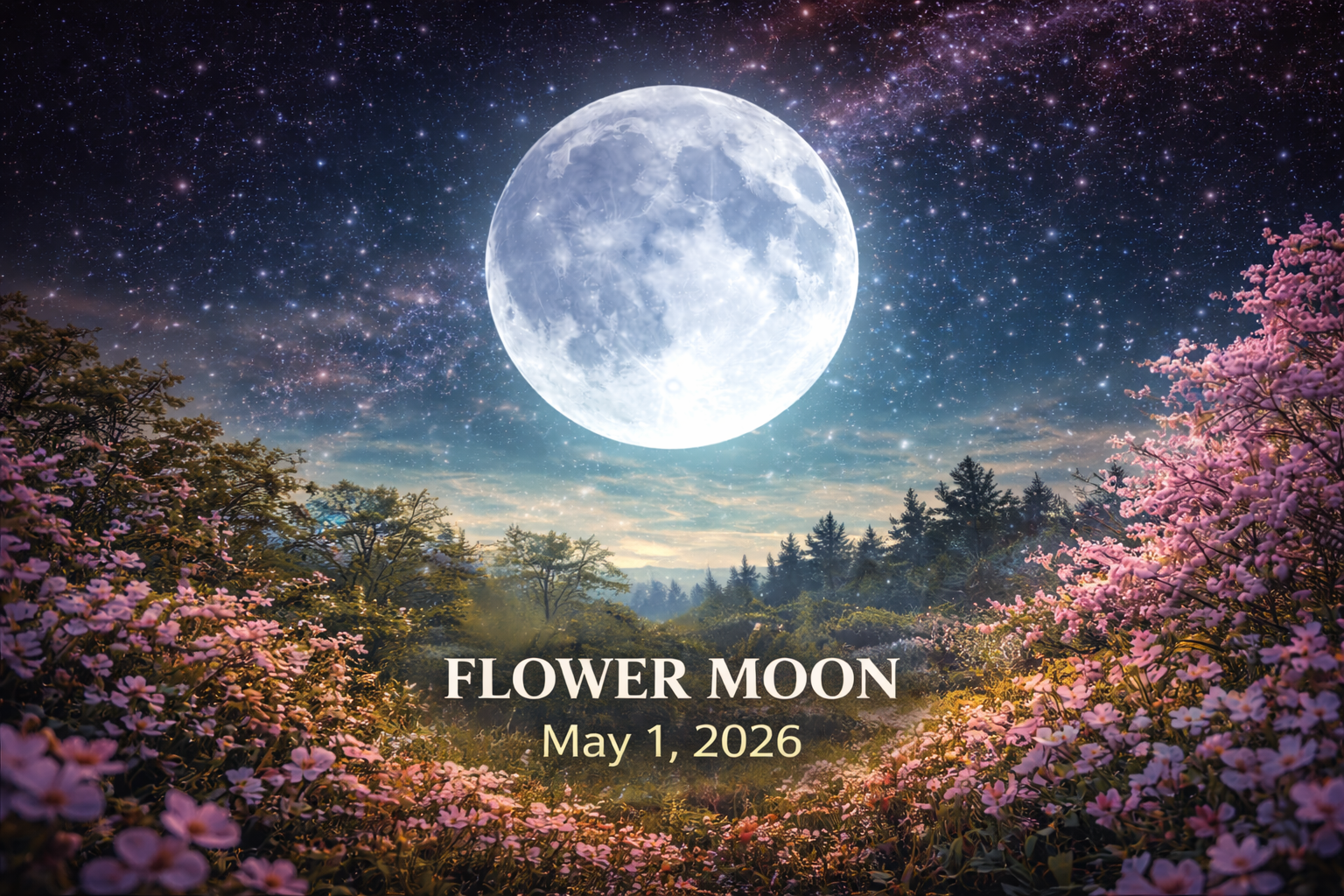
Exactly one month later, on May 1, 2026, the sky will glow again with the Flower Moon.
By early May, spring has fully taken hold. Trees are covered in leaves, wildflowers blanket meadows, and landscapes burst into color. It is this explosion of life that gave the May full moon its beautiful name.
The Flower Moon has long symbolized abundance, growth, and the peak of spring’s beauty.
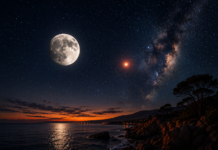
For skywatchers, it is often one of the most pleasant full moons of the year to observe. With warmer evenings and clearer skies in many regions, the Flower Moon offers a perfect opportunity to step outside and admire the Moon rising above blooming landscapes.
? A Beautiful Lunar Transition
Together, the Pink Moon and the Flower Moon represent a poetic journey through spring.
The Pink Moon marks the delicate beginning — the first flowers pushing through the soil after winter.
The Flower Moon celebrates the full bloom of the season, when nature reaches its most colorful and vibrant stage.
From a scientific perspective, these names are not official astronomical terms. However, they remain deeply embedded in cultural astronomy and seasonal traditions around the world.
They remind us that the Moon has always been more than just a celestial object. For thousands of years, people have used the lunar cycle to track the seasons, guide planting and harvesting, and mark important moments in nature’s calendar.
? How to Observe the Pink Moon and Flower Moon
Observing these full moons requires no special equipment.
The best time to watch them is just after sunset, when the Moon rises above the horizon and appears especially large and golden due to atmospheric effects.
For the most beautiful view:
• Find a location away from bright city lights
• Look toward the eastern horizon at moonrise
• Bring a camera or binoculars for extra detail
Even without equipment, the full Moon is one of the easiest and most rewarding astronomical sights visible from Earth.
? A Reminder From the Night Sky
In a world filled with fast-moving headlines and constant noise, the quiet rhythm of the Moon continues unchanged.
The Pink Moon and the Flower Moon offer something simple but powerful — a moment to pause, look up, and reconnect with the natural cycles that shape our planet.
From the first blooms of spring to the full beauty of nature, the Moon will once again light the way across the spring sky.
And all we have to do… is look up.
? Key Dates
? Pink Moon — April 1, 2026
? Flower Moon — May 1, 2026