February 28 brings one of the most captivating sky events of the year.
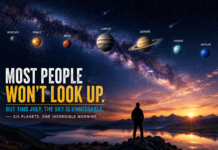
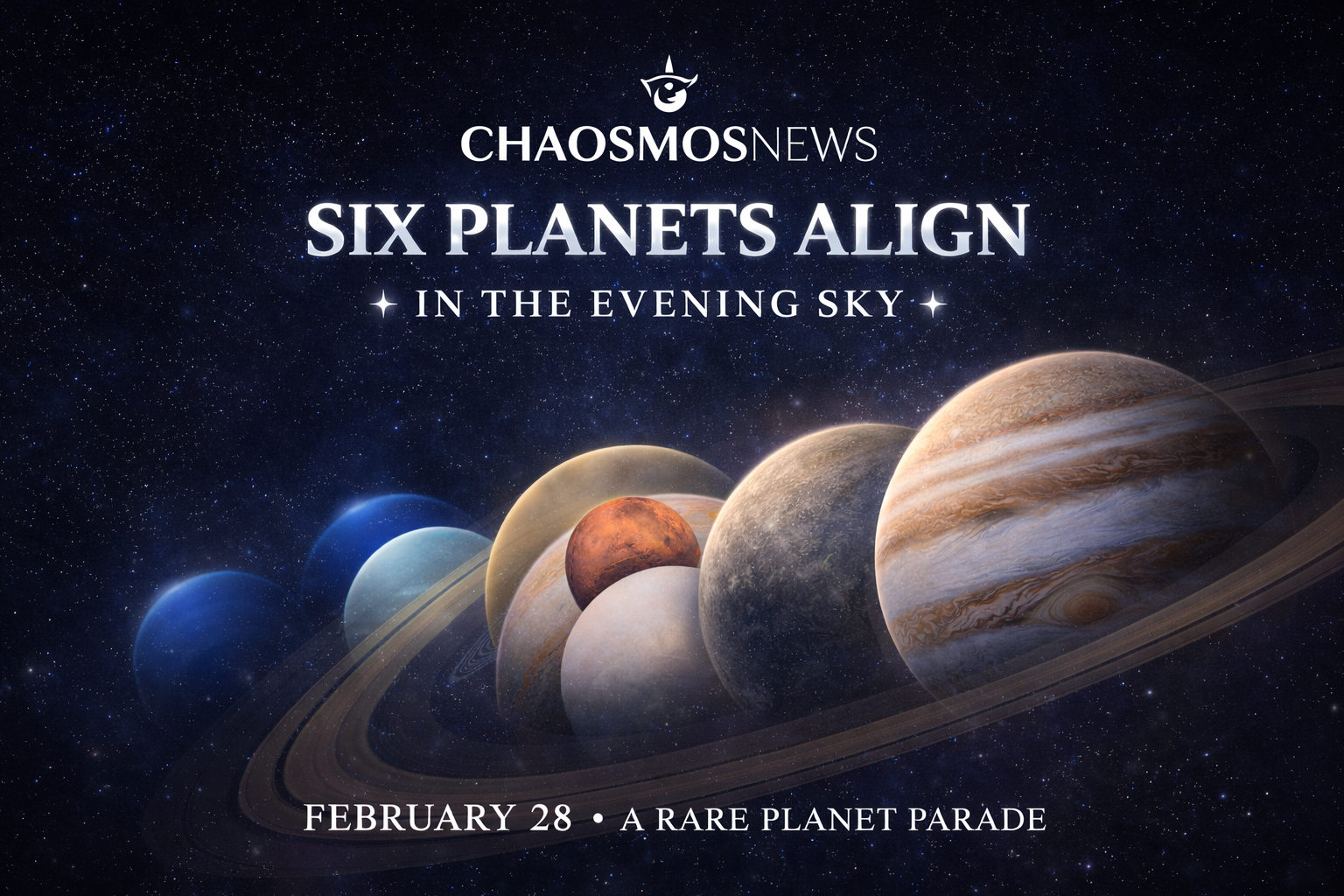
For a brief window after sunset, six planets — Mercury, Venus, Saturn, Neptune, Uranus, and Jupiter — appear together in the evening sky, stretched along the ecliptic like luminous pearls across twilight.
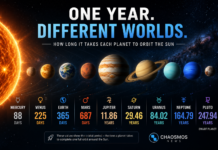
This is not a perfectly straight-line alignment in space. The planets remain separated by billions of kilometers. But from our vantage point on Earth, they gather along the same arc of sky — creating what astronomers call a planet parade.
And tonight, the parade is underway.
? Jupiter Steals the Show
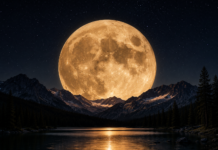
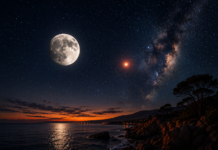
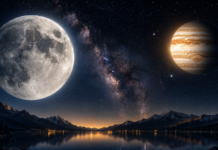
In the eastern sky, Jupiter shines unmistakably bright near the twin stars of Gemini. It glows beside a nearly full Moon, creating one of the most eye-catching pairings of the night.
Jupiter is the anchor of this alignment — bold, brilliant, impossible to miss.
For many skywatchers, this will be the easiest planet to identify. Simply step outside after sunset, face east, and look for the brightest “star” in that part of the sky.
? Uranus Beneath the Pleiades
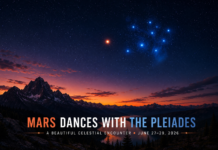
Higher in the sky, Uranus sits quietly in Taurus, beneath the famous Pleiades star cluster. Unlike Jupiter or Venus, Uranus is subtle. To most observers, binoculars will be necessary to separate it from the surrounding star field.
Finding Uranus adds an extra layer of reward to the evening — a reminder that not all celestial treasures reveal themselves easily.
? The Western Challenge: Venus, Mercury & Saturn
The western horizon presents the real test.
Venus burns brilliantly in the fading twilight, low but unmistakable. Nearby, Mercury and Saturn hover close to the horizon, racing against the setting Sun.
Timing is critical.
A clear western horizon and early viewing shortly after sunset offer the best chance.
Neptune lingers in this same region, but spotting it requires a telescope and precise positioning. Its faint glow is easily lost in twilight.
? Worlds Separated by Billions of Kilometers
Though these planets appear close together from Earth, they remain vast distances apart:
-
Mercury: ~77 million km from Earth (variable)
-
Venus: ~38 million km at closest approach
-
Jupiter: ~628 million km
-
Uranus: ~2.6 billion km
-
Neptune: ~4.3 billion km
Yet for one evening, perspective unites them in a shared celestial arc.
This is the beauty of orbital geometry — a moment when the Solar System briefly appears organized before our eyes.
? What Will You Actually See?
With the naked eye:
-
Jupiter (bright and dominant)
-
Venus (low and brilliant)
-
Possibly Mercury and Saturn under clear conditions
With binoculars:
-
Uranus
-
Improved view of Mercury and Saturn
With a telescope:
-
Neptune
-
Saturn’s rings
-
Jupiter’s moons
⏳ A Brief Window in Time
Planet alignments like this are not exceedingly rare — but the opportunity to see multiple worlds in one sweep of the sky is always special.
Clear skies, dark surroundings, and patience will make the difference.
Let your eyes adjust for 15–20 minutes.
Avoid bright phone screens.
Scan slowly along the ecliptic — the same path the Sun and Moon follow.
Tonight, you are witnessing orbital mechanics in motion.
? Why Events Like This Matter
Moments like these reconnect us with scale.
Six worlds.
Billions of kilometers apart.
Sharing the same sky from our perspective.
In a single glance, you’re looking across nearly the entire Solar System.
And that perspective changes everything.
✨ Final Word
Step outside after sunset.
Face west, then sweep your gaze eastward.
Let your eyes trace the arc of the ecliptic.
For one evening, the Solar System reveals its architecture.
And you’re invited to watch.