For years, Climate.gov served as one of the United States’ most trusted public resources for climate science. Operated by the National Oceanic and Atmospheric Administration (NOAA), the website translated complex scientific research into accessible information for millions of people.
Teachers relied on it for classroom materials. Farmers used it to understand drought conditions and seasonal outlooks. Journalists turned to it for reliable data and expert explanations. Emergency managers consulted its climate indicators to prepare for hurricanes, floods, heatwaves, and other extreme weather events.
More than just a website, Climate.gov became a bridge between scientific research and everyday decision-making.
That bridge has now been replaced by a new one.
The End of Climate.gov
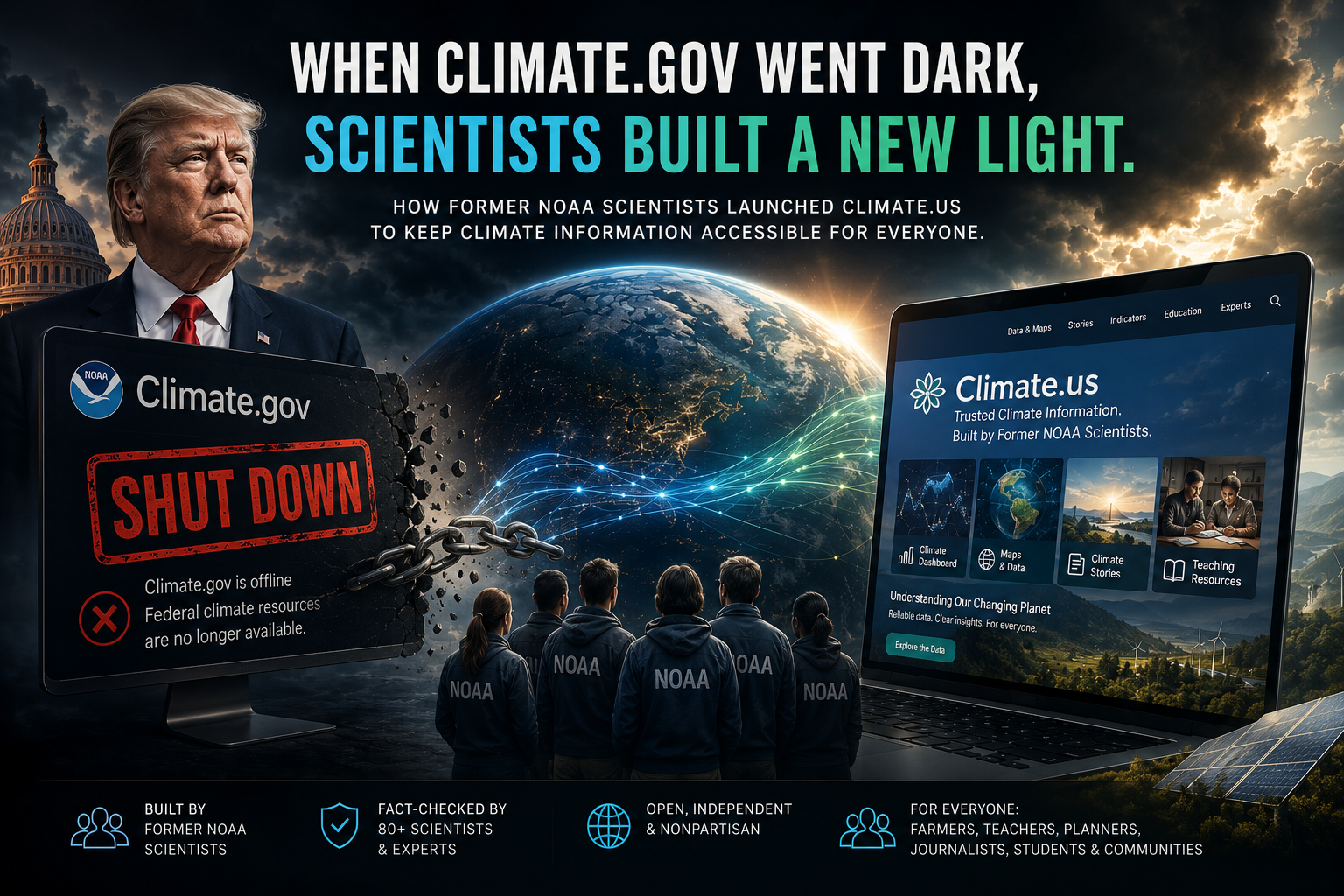
Following workforce reductions during the Trump administration, the team responsible for maintaining Climate.gov was significantly affected. The website itself was eventually taken offline, bringing an end to one of the federal government’s best-known climate communication platforms.
While the underlying climate datasets largely remain available through various government databases and NOAA archives, many experts argue that access to raw data alone is not enough.
The challenge was never simply storing information.
The challenge was helping people understand it.
Climate.gov provided context, visualization tools, educational materials, explainers, dashboards, and regularly updated articles that transformed complex scientific measurements into practical knowledge.
Without that layer of communication, many feared the public would struggle to find and interpret trustworthy climate information.
Scientists Refused to Let Years of Work Disappear
Instead of watching decades of public science communication fade away, a group of former NOAA employees decided to start over.
Led by former Climate.gov program director Rebecca Lindsey and supported by colleagues from across NOAA, the team launched a completely independent project:
Climate.us
Rather than recreating government policy, the goal was much simpler:
Preserve trusted climate communication and keep scientific information accessible to everyone.
Built by Scientists, Supported by the Public
Unlike a traditional government website, Climate.us is being built through a combination of crowdfunding, volunteer contributions, and scientific collaboration.
The project reportedly raised approximately $280,000 from public supporters to build its technical infrastructure.
In addition, around 80 volunteer scientists have joined the initiative to review articles, fact-check content, and help maintain scientific accuracy.
This collaborative model allows former government experts to continue sharing climate knowledge outside of official federal structures.
What Can You Find on Climate.us?
The new platform aims to provide many of the same educational tools that made Climate.gov so valuable.
These include:
- Climate news and analysis
- Interactive climate dashboards
- Maps and visual data tools
- Climate indicators
- Educational resources for teachers
- Classroom materials
- Expert blogs
- Climate literacy guides
- Scientific explainers
- Visual reports on long-term climate trends
Rather than simply publishing raw numbers, the platform focuses on helping readers understand what those numbers actually mean.
Why Accessible Climate Information Matters
Climate information is often associated with scientists and researchers.
In reality, it influences everyday decisions across society.
Farmers use seasonal climate outlooks to plan planting and irrigation.
Emergency managers prepare for hurricanes, floods, wildfires, and heatwaves using climate projections.
City planners design infrastructure with future climate risks in mind.
Teachers introduce climate literacy to new generations.
Journalists depend on trusted scientific sources to accurately explain complex environmental events.
Businesses evaluate climate risks before making long-term investments.
Reliable climate communication helps transform scientific observations into practical decisions.
A Question Beyond Politics
The launch of Climate.us is about more than one website.
It raises a broader question about how scientific information should be shared in democratic societies.
Should access to trusted public climate information depend on changes in political leadership?
Supporters of Climate.us argue that scientific communication should remain stable regardless of who holds office.
Others view changes to government programs as part of normal administrative priorities.
Regardless of political perspective, one point remains clear:
Climate data continue to shape decisions affecting agriculture, infrastructure, disaster preparedness, education, public health, and environmental planning.
Ensuring that this information remains understandable and accessible will likely remain an important challenge for years to come.
A New Home for Climate Communication
Climate.us represents an effort by former NOAA scientists to continue making climate information available in an accessible, educational format outside the federal government.
Whether it becomes a long-term successor to Climate.gov remains to be seen.
But its launch demonstrates how scientific communities can reorganize and continue their work even after significant institutional changes.
For millions of people who rely on understandable climate information—not just raw datasets—the project offers a new place to learn, explore, and better understand our changing planet.
Sources
- NPR — Ex-NOAA employees re-create a valuable climate data site shut down by Trump
- Climate.us
- National Oceanic and Atmospheric Administration (NOAA)
- Public statements from former Climate.gov program director Rebecca Lindsey