For decades, humanity has asked one of the most profound questions in science:
Are we alone in the universe?
Now, a new discovery may have brought us one step closer to an answer.
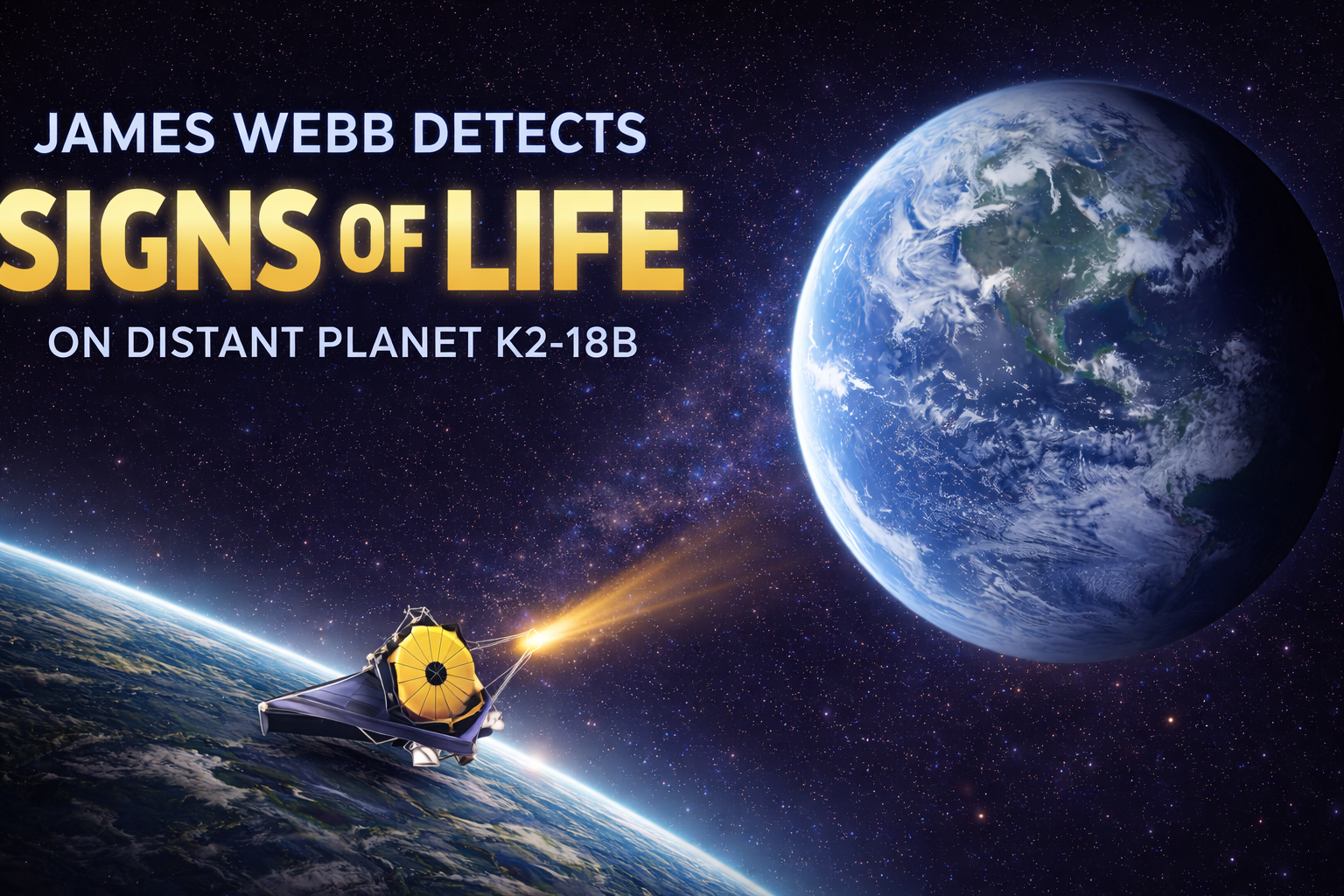
Astronomers using the powerful James Webb Space Telescope have detected intriguing molecules in the atmosphere of the distant exoplanet K2-18b, located about 120 light-years from Earth. Some of these molecules could potentially be linked to biological activity.
While scientists emphasize that this is not proof of alien life, the discovery represents one of the most compelling biosignature hints ever found beyond our solar system.
? A Mysterious Ocean World
K2-18b is a fascinating planet unlike anything in our solar system.
It is roughly 2.6 times the size of Earth and about eight times more massive, placing it in a category known as sub-Neptunes — planets larger than Earth but smaller than Neptune.
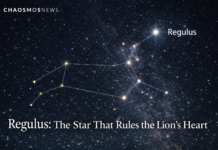
The planet orbits a cool red dwarf star called K2-18 in the constellation Leo.
What makes K2-18b especially interesting is its location in the star’s habitable zone — the region where temperatures could allow liquid water to exist.
Recent studies suggest the planet could be a Hycean world, a theoretical type of planet with a hydrogen-rich atmosphere and a vast global ocean beneath it.
If true, such environments could potentially support microbial life.
? What Did James Webb Actually Detect?
Using its advanced infrared instruments, the James Webb Space Telescope analyzed starlight passing through the planet’s atmosphere as K2-18b transited in front of its star.
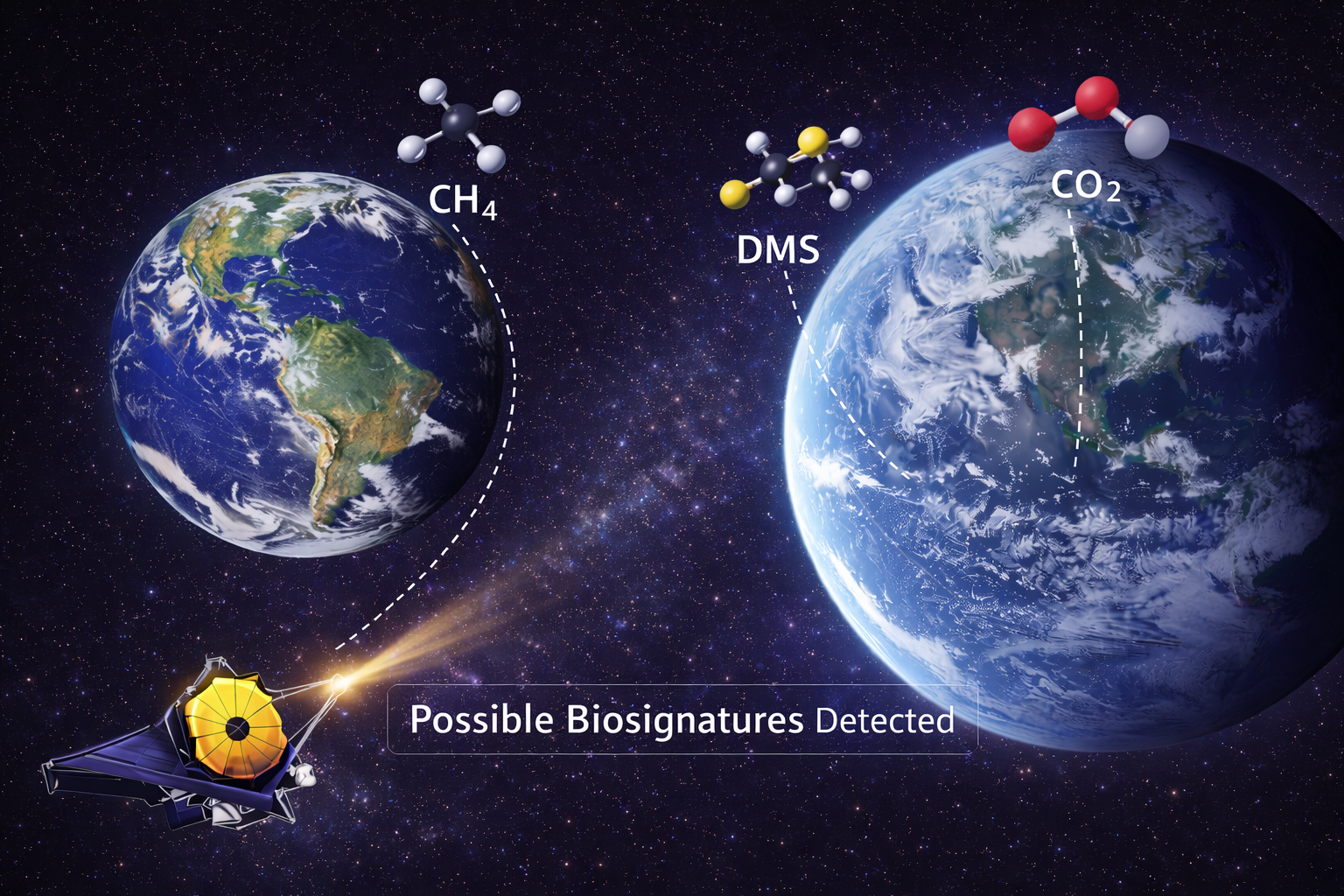
This technique revealed several important molecules in the atmosphere, including:
-
Methane (CH₄)
-
Carbon dioxide (CO₂)
But the most intriguing signal came from a molecule called dimethyl sulfide (DMS).
On Earth, DMS is almost exclusively produced by life, particularly microscopic marine organisms such as phytoplankton in Earth’s oceans.
If the detection is confirmed, it could represent a possible biosignature — a chemical indicator that life might exist on the planet.
⚠️ Not Proof of Alien Life — Yet
Despite the excitement, scientists are being cautious.
Detecting a molecule in a distant planet’s atmosphere does not automatically mean life is present. There may be unknown chemical processes capable of producing similar signals without biology.
Researchers will need additional observations and independent studies to confirm whether the signal truly represents dimethyl sulfide and whether it could be produced without living organisms.
Still, the discovery marks an important milestone.
For the first time, astronomers may be seeing chemical hints associated with life in the atmosphere of a distant ocean world.
? A New Era in the Search for Life
The James Webb Space Telescope is transforming the way scientists study exoplanets.
Before JWST, detecting atmospheric molecules on distant worlds was extremely difficult. Now, astronomers can analyze the chemistry of planets hundreds of trillions of kilometers away.
This capability opens a new chapter in the search for life beyond Earth.
Future observations of K2-18b — and other potentially habitable planets — may reveal even clearer biosignatures.
? Are We Getting Closer to the Answer?
The universe contains hundreds of billions of galaxies, each with billions of stars and potentially countless planets.
Discoveries like the one on K2-18b remind us that the ingredients for life may not be unique to Earth.
Whether or not life actually exists on this distant ocean world remains uncertain.
But one thing is becoming increasingly clear:
We are entering the era when humanity may finally detect life beyond our planet.
And when that day comes, it will change our understanding of the universe forever.