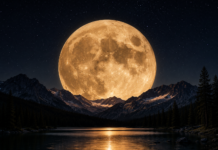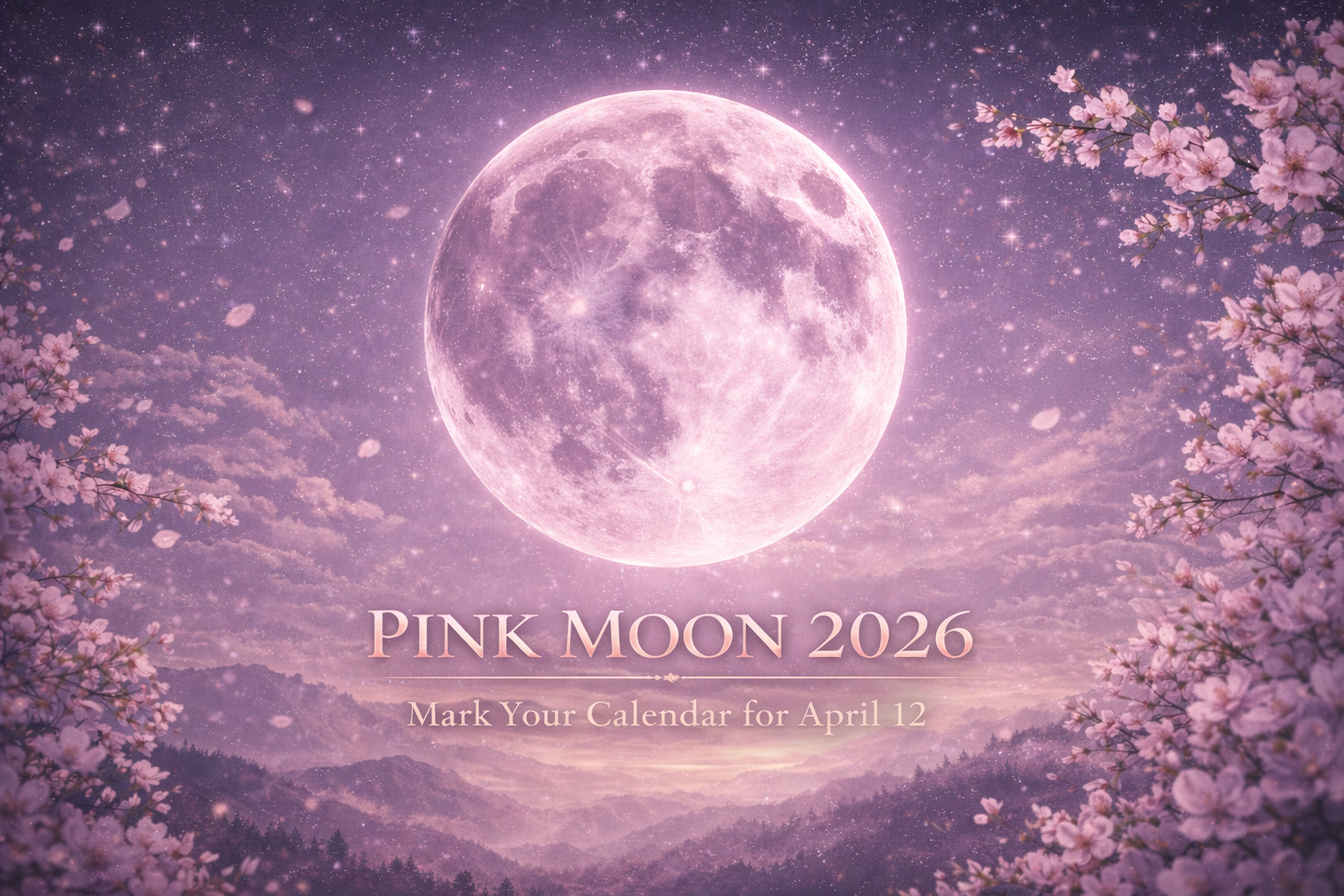
April 12, 2026 — The night sky will glow with the soft brilliance of April’s Full Moon, traditionally known as the Pink Moon. While the Moon itself will not actually appear pink, its name carries centuries of seasonal meaning tied to the arrival of spring across the Northern Hemisphere.
As winter loosens its grip and longer days take hold, this full moon rises as a celestial signal: the season of renewal has truly begun.
? Why Is It Called the Pink Moon?
Despite the name, the Moon will shine in its usual silver-white brilliance.
The term “Pink Moon” comes from early Native American and colonial American traditions. It is associated with Phlox subulata, also known as creeping phlox or moss phlox — one of the first wildflowers to bloom in early spring across North America. These vibrant pink blossoms carpet fields and hillsides just as April’s full moon rises.
The name is seasonal, not visual.
Other traditional names for April’s full moon include:
-
Sprouting Grass Moon
-
Egg Moon
-
Fish Moon
Each reflects renewal, fertility, and nature’s reawakening.
? Astronomical Details — April 12, 2026
-
? Date: April 12, 2026
-
? Visibility: Worldwide (weather permitting)
-
? Best Viewing Time: Shortly after sunset, when the Moon rises in the east
-
? Equipment Needed: None — fully visible to the naked eye
The full moon occurs when Earth lies directly between the Sun and the Moon. Sunlight fully illuminates the lunar surface from our perspective, making it appear round and bright.
In April, the Moon’s path often places it lower in the sky for Northern Hemisphere observers. This can enhance atmospheric scattering at moonrise, sometimes giving it a warm golden or peach hue near the horizon.
? The Science Behind the Glow
When the Moon rises, its light passes through more of Earth’s atmosphere compared to when it is high overhead. The atmosphere scatters shorter blue wavelengths and allows more red and orange tones to pass through.
This is why the Moon may appear:
-
Golden
-
Amber
-
Soft peach
— especially during moonrise.
It’s not truly pink, but the warm spring atmosphere can create a subtle romantic tone that matches its seasonal name.
? Seasonal Meaning: A Turning Point in the Year
The Pink Moon typically arrives a few weeks after the March Equinox. By this point:
-
Blossoms begin to spread across temperate regions
-
Migration patterns intensify
-
Evenings grow noticeably brighter
-
Temperatures rise steadily
April’s full moon marks the heart of spring — a moment when the transformation is undeniable.
Across cultures, full moons in spring are often associated with:
-
Renewal
-
Fertility
-
Growth
-
New beginnings
It’s a symbolic bridge between dormancy and abundance.
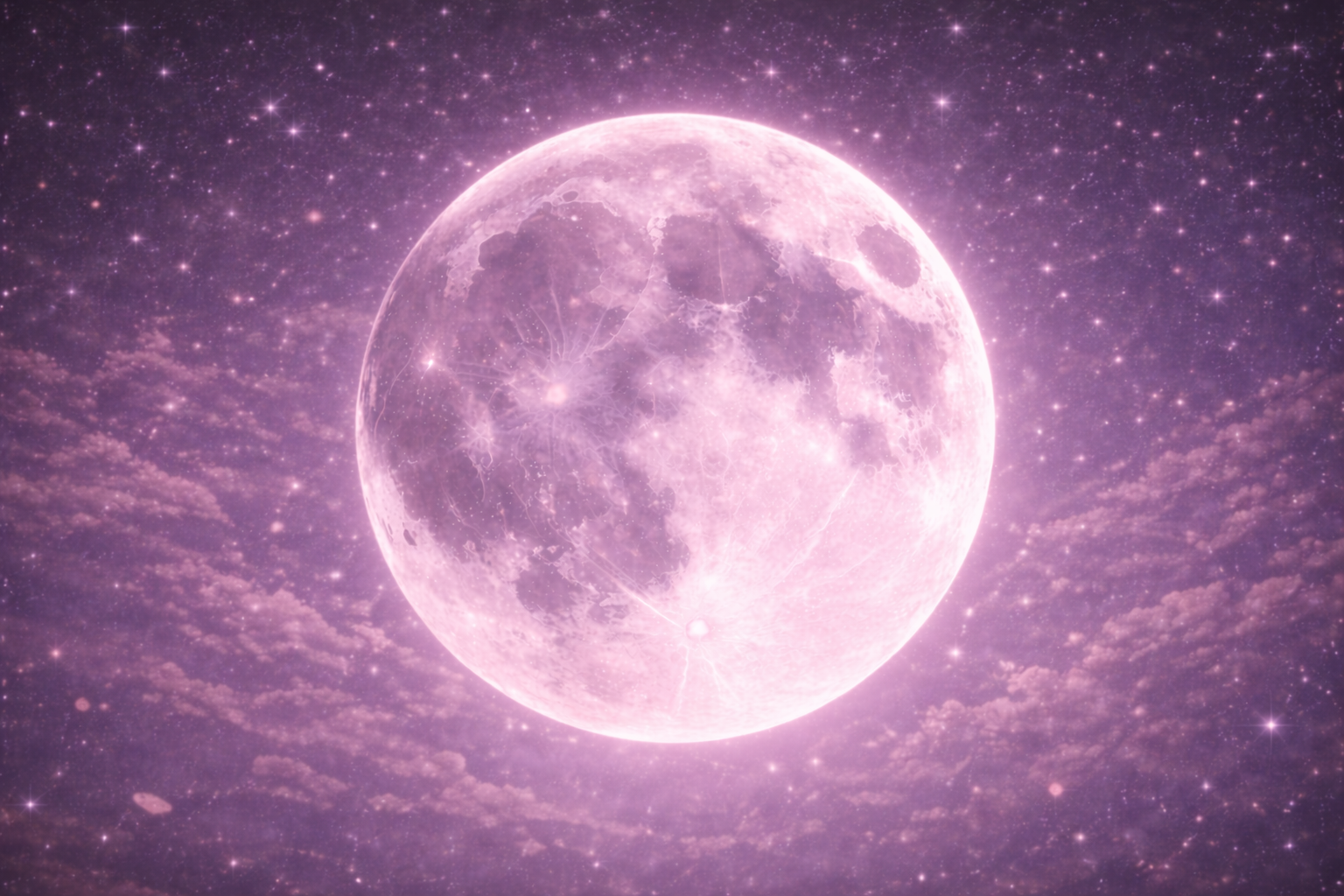
? How to Photograph the Pink Moon
For the most dramatic images:
-
Capture it just after moonrise
-
Include a foreground (trees, hills, architecture)
-
Use a tripod for stability
-
Slightly underexpose to preserve lunar details
Cherry blossoms, flowering trees, or soft mountain silhouettes make ideal compositions — especially fitting for April’s theme.
✨ A Quiet Cosmic Reminder
There is something deeply poetic about April’s full moon.
It doesn’t announce itself with eclipses or meteor storms.
It doesn’t blaze like a supermoon.
It simply rises — steady, luminous, and perfectly timed with Earth’s renewal.
In a season defined by growth and second chances, the Pink Moon reminds us that cycles are natural. After darkness, there is always light. After winter, there is bloom.
On April 12, 2026, look east after sunset.
Spring will be rising with the Moon.
? Final Thought
The Pink Moon is not about color.
It is about timing.
It is about transformation.
And above all — it is about rhythm.
Mark your calendar.
Step outside.
Look up.