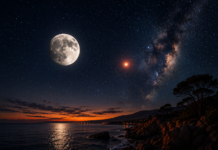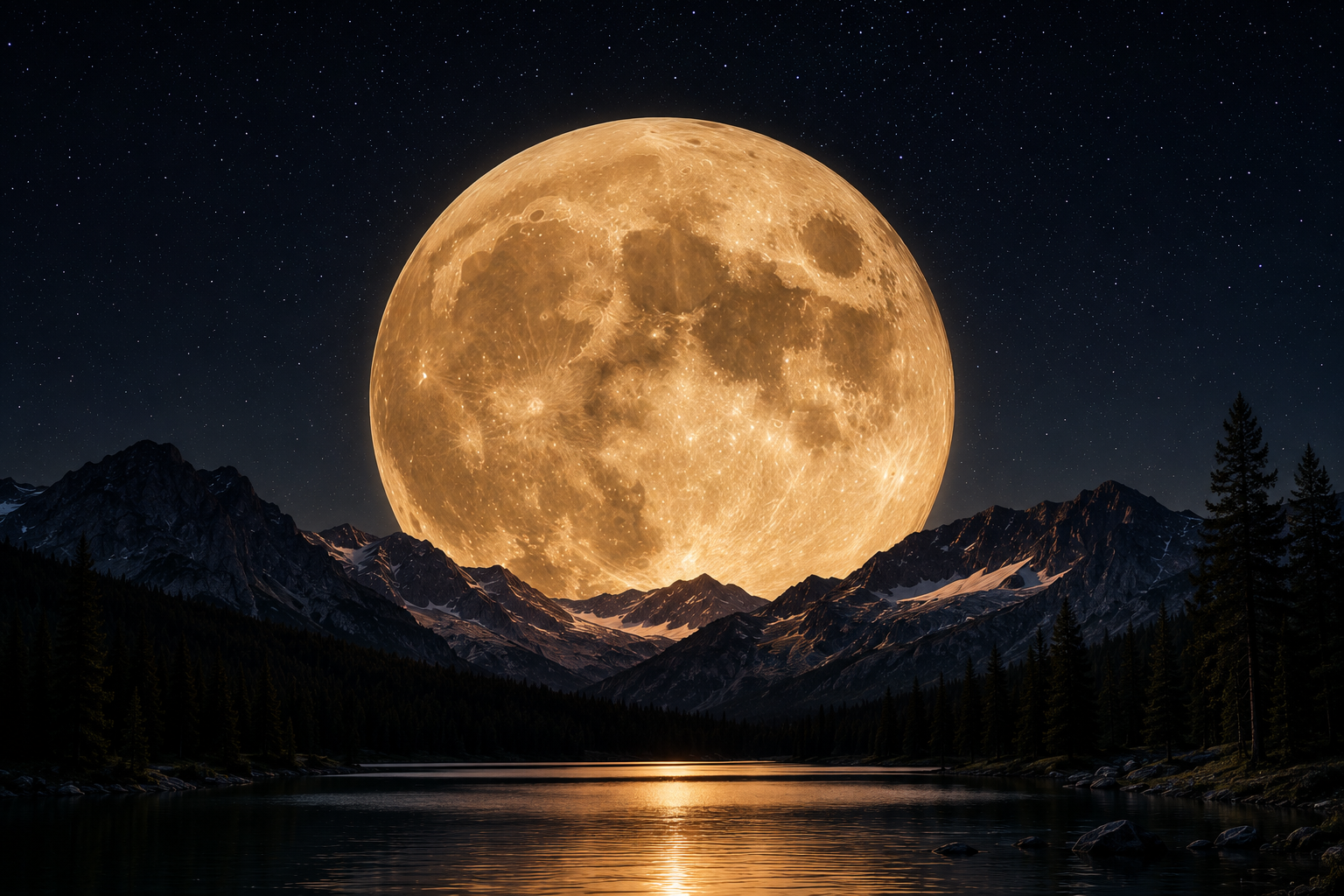
On the night of July 29, 2026, skywatchers around the world will witness the rise of the Full Buck Moon—one of the most recognizable and widely celebrated full moons of the year. As the Moon climbs above the eastern horizon after sunset, it will illuminate the summer sky with its familiar golden glow, offering a spectacular sight for anyone willing to step outside and look up.
Although every full Moon is created by the same celestial alignment, each carries its own seasonal identity. The Buck Moon is closely tied to nature’s annual rhythms and has been known by many different names across cultures for centuries.
Why Is It Called the Buck Moon?
The name Buck Moon originates from Native American traditions and was later popularized through publications such as The Old Farmer’s Almanac. It refers to the time of year when male deer (bucks) begin growing a fresh set of antlers.
Every year, bucks shed their antlers during late winter or early spring. By midsummer, a new pair has emerged, covered in a soft, nutrient-rich tissue known as velvet. These antlers continue growing rapidly throughout the summer before hardening ahead of the autumn breeding season.
Because this annual transformation coincides with the July full Moon, many Indigenous communities associated the Moon with this remarkable stage in the deer’s life cycle. Over time, the name became one of the best-known seasonal full Moon names still used today.
Many Cultures Had Different Names
While “Buck Moon” is the most familiar modern name, different cultures described July’s full Moon according to the seasonal events most important to them.
Some Indigenous peoples referred to it as the:
- Thunder Moon, reflecting the frequent summer thunderstorms.
- Salmon Moon, marking important fish migrations.
- Berry Moon, when many wild berries reached their peak.
- Hay Moon or Mead Moon in parts of Europe, celebrating harvests and midsummer traditions.
These names remind us that long before calendars and smartphones, people relied on the Moon to track the changing seasons and the natural world around them.
Why Does the Moon Look So Large Near the Horizon?
One of the most striking moments occurs just after moonrise.
As the Full Buck Moon appears above the horizon, many observers feel that it looks dramatically larger than it does later in the night. This effect is known as the Moon Illusion.
Interestingly, the Moon is not actually larger at moonrise. Its apparent increase in size is created by the way the human brain interprets objects near the horizon in comparison with trees, mountains, buildings, and other familiar landmarks.
Combined with its warm orange color, this illusion often creates one of the most photogenic views of the year.
Why Does the Moon Turn Orange?
When the Moon is low in the sky, its light must travel through a much thicker layer of Earth’s atmosphere before reaching our eyes.
During this journey, shorter blue wavelengths are scattered away more efficiently, allowing the longer red and orange wavelengths to dominate. This same physical process—known as Rayleigh scattering—also produces colorful sunrises and sunsets.
As the Moon climbs higher into the sky, its light passes through less atmosphere, gradually returning to its familiar pale white appearance.
How Bright Is a Full Moon?
A full Moon reflects only about 12 percent of the sunlight that reaches its surface. Despite this relatively low reflectivity, its enormous size makes it the brightest object in Earth’s night sky after the Sun.
Under dark conditions, moonlight is bright enough to cast visible shadows and illuminate landscapes, making it possible to walk outdoors without artificial lighting.
The Full Buck Moon is especially beautiful during warm summer evenings, when many people enjoy camping, hiking, or simply watching the night sky.
Best Time to Watch
The best viewing experience begins shortly after sunset, when the Moon first rises above the eastern horizon.
A location with an unobstructed view toward the east—such as a hilltop, open field, lakeshore, or coastline—offers the most dramatic perspective.
No telescope is required. The Moon is spectacular with the naked eye, although binoculars or a small telescope will reveal thousands of impact craters, ancient lava plains (maria), and rugged mountain ranges across its surface.
Photographers often prefer moonrise because foreground landscapes create a powerful sense of scale, making the Moon appear especially impressive in images.
A Connection Between Astronomy and Nature
Unlike eclipses or rare planetary alignments, a full Moon occurs every month. Yet each one carries a unique cultural story rooted in the seasonal rhythms of life on Earth.
The Buck Moon serves as a reminder that astronomy is not only about planets and galaxies—it has also helped people understand the passage of time, wildlife behavior, agriculture, and changing seasons for thousands of years.
Looking up at the Full Buck Moon means seeing the same Moon that guided explorers, inspired storytellers, and marked the rhythms of nature for countless generations.
Sometimes, the most extraordinary celestial event is simply the one that reminds us to pause, step outside, and look up.
Sources
- NASA – Moon Overview
- NASA Scientific Visualization Studio
- The Old Farmer’s Almanac
- EarthSky
- Royal Museums Greenwich